When planning a sports facility or a commercial recreational area, the balance between initial capital expenditure and long-term operational costs is critical. Many project managers focus heavily on the artificial grass installation price, yet the true value of a playing surface is found in its lifecycle efficiency. Traditional infill systems often incur hidden costs through recurring sand replenishment and intensive labor. In contrast, modern non-infill technology, such as the IFG30 system, redefines the economic model by eliminating the need for quartz sand or rubber granules. This shift not only streamlines the construction phase but significantly reduces the annual maintenance burden, making it a superior choice for schools and community hubs where budget predictability and hygiene are paramount.

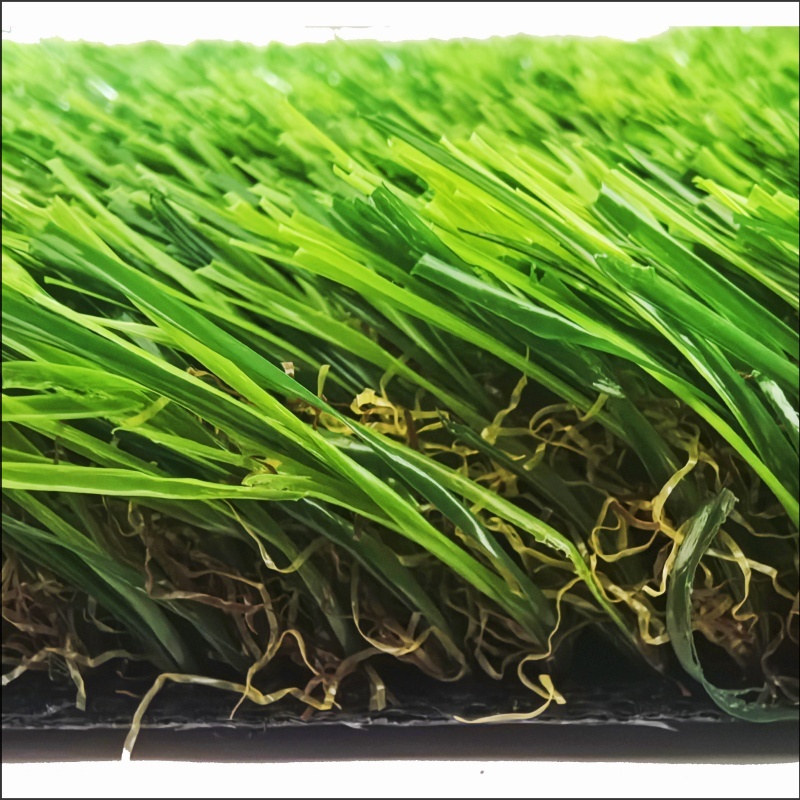
Traditional artificial football grounds rely on external fillers like silica sand to stabilize fibers and provide shock absorption. While functional, these materials often migrate, clog drainage systems, and require periodic topping-up. Non-infill artificial grass is engineered to provide structural stability through its own internal architecture. By utilizing high-density tufting and advanced yarn geometry, the fibers remain upright and resilient without the need for heavy filling materials.
The XY Grass IFG30 system utilizes a sophisticated combination of PP and PE yarns, specifically designed to mimic the resilience of natural grass. This engineering approach ensures that the ball rolls consistently and players experience reliable traction. Because the stability is built into the carpet structure itself, the system is inherently cleaner and more sustainable, removing the environmental concerns associated with rubber crumb migration and dust inhalation in high-traffic school environments.

The primary operational struggle with traditional turf is the "maintenance cycle"—the constant need for brushing, redistributing sand, and replacing rubber. A no-infill system fundamentally breaks this cycle. Daily maintenance is reduced to simple cleaning and debris removal, which drastically lowers the workload for facility operators and reduces the total cost of ownership over the field's lifespan.
Furthermore, the lack of loose particles prevents the common problem of "tracking," where sand and rubber granules are carried into locker rooms, adjacent buildings, and walkways. This ensures a cleaner facility environment. Coupled with a high-permeability backing system, rainwater drains quickly through the perforated base, minimizing puddles and ensuring the field is available for use shortly after heavy precipitation, thereby maximizing the venue's revenue-generating potential for commercial operators.
Different environments demand different turf characteristics. For educational institutions, safety and hygiene are the top priorities. Sand-free turf eliminates the risk of inhaling sand dust and provides a safe, non-toxic surface for children's physical education. In community centers, where usage frequency is exceptionally high, the low-maintenance nature of non-infill grass ensures the facility remains in top condition without requiring a full-time maintenance crew.
Professional training grounds and small commercial soccer fields also benefit significantly. For commercial ventures, the accelerated installation speed allows the business to open sooner, while the reduced operating expenses directly enhance the bottom line. Whether it is a rooftop court in an urban center or a multi-purpose athletic field in a rural school, the ability to deploy a high-performance surface without the logistical headache of importing tons of infill material is a decisive advantage.
| Feature Parameter | Non-Infill (IFG30) | Traditional Infill | Impact on Operation |
|---|---|---|---|
| Installation Process | Direct Laying | Multi-layer Filling | Faster deployment time |
| Maintenance Level | Low (Surface cleaning) | High (Sand topping) | Reduced labor costs |
| Surface Cleanliness | High (No loose particles) | Moderate (Dust/Grains) | Cleaner indoor areas |
| Environmental Risk | Eco-friendly / Non-toxic | Rubber/Sand migration | Better for children/pets |
| Drainage Efficiency | Fast (Engineered Backing) | Variable (Silt buildup) | Consistent field availability |
Selecting a manufacturer involves more than comparing a quote. Project longevity depends on the consistency of the yarn, the strength of the tuft lock, and the reliability of the supply chain. An integrated manufacturer that handles extruding, weaving, and coating under one roof provides better quality control and more competitive pricing by eliminating middleman margins. This vertical integration is essential for large projects requiring millions of square meters of consistent material.
Moreover, compliance with international safety standards such as REACH and ROHS is non-negotiable for public spaces. Ensuring that the materials are UV-resistant and fire-retardant guarantees that the field will not fade or degrade under harsh weather conditions. When evaluating suppliers, look for those who can provide customized solutions in terms of pile height, density, and roll dimensions to match the specific intensity of use expected for the venue.
The industry is moving rapidly toward "lean" sports infrastructure. The trend is shifting away from complex, high-maintenance systems toward intuitive, sustainable solutions. We are seeing an increase in the adoption of non-infill surfaces not just for soccer, but for multi-purpose recreational zones and urban rooftop sports facilities where weight limitations make traditional sand-filled systems impractical.
For procurement managers, the focus is shifting from the initial purchase price toward the "Total Cost of Ownership" (TCO). By investing in a higher-quality, non-infill system initially, organizations can save significantly on annual operational budgets. As environmental regulations tighten globally, the elimination of rubber infill will likely become a standard requirement rather than an optional upgrade, making the transition to sand-free technology a future-proof investment for any sports facility.
Non-infill artificial grass is a synthetic turf designed with high-density fibers and a specially engineered backing that provides stability and resilience without requiring the addition of silica sand or rubber granules. This makes the installation cleaner and significantly reduces ongoing maintenance.
Yes. Unlike traditional systems, the IFG30 and similar non-infill products use advanced yarn structures and optimized tuft density to keep the fibers upright and provide the necessary support, completely eliminating the need for external filling materials.
Absolutely. It is engineered to provide stable field conditions and consistent ball movement, making it ideal for professional training grounds, school sports fields, and community soccer centers where durability and performance are critical.
These systems utilize a perforated backing and a high-permeability geotextile fabric. Rainwater passes directly through the turf and the drainage holes in the backing, preventing puddles and ensuring the field remains playable in various weather conditions.
Yes, it is an ideal choice for rooftops and concrete bases because it is much lighter than traditional sand-filled turf and easier to install, reducing the structural load on the building.
With proper basic cleaning and occasional brushing to keep fibers upright, premium non-infill artificial grass typically lasts between 8 to 15 years, depending on the level of traffic and the local climate.
Investing in a high-performance sports surface requires a strategic look at both quality and long-term operational costs. By choosing a manufacturer with integrated production capabilities and advanced non-infill technology, facility owners can ensure a safe, durable, and low-maintenance environment for athletes and the community.


Hit enter to search or ESC to close