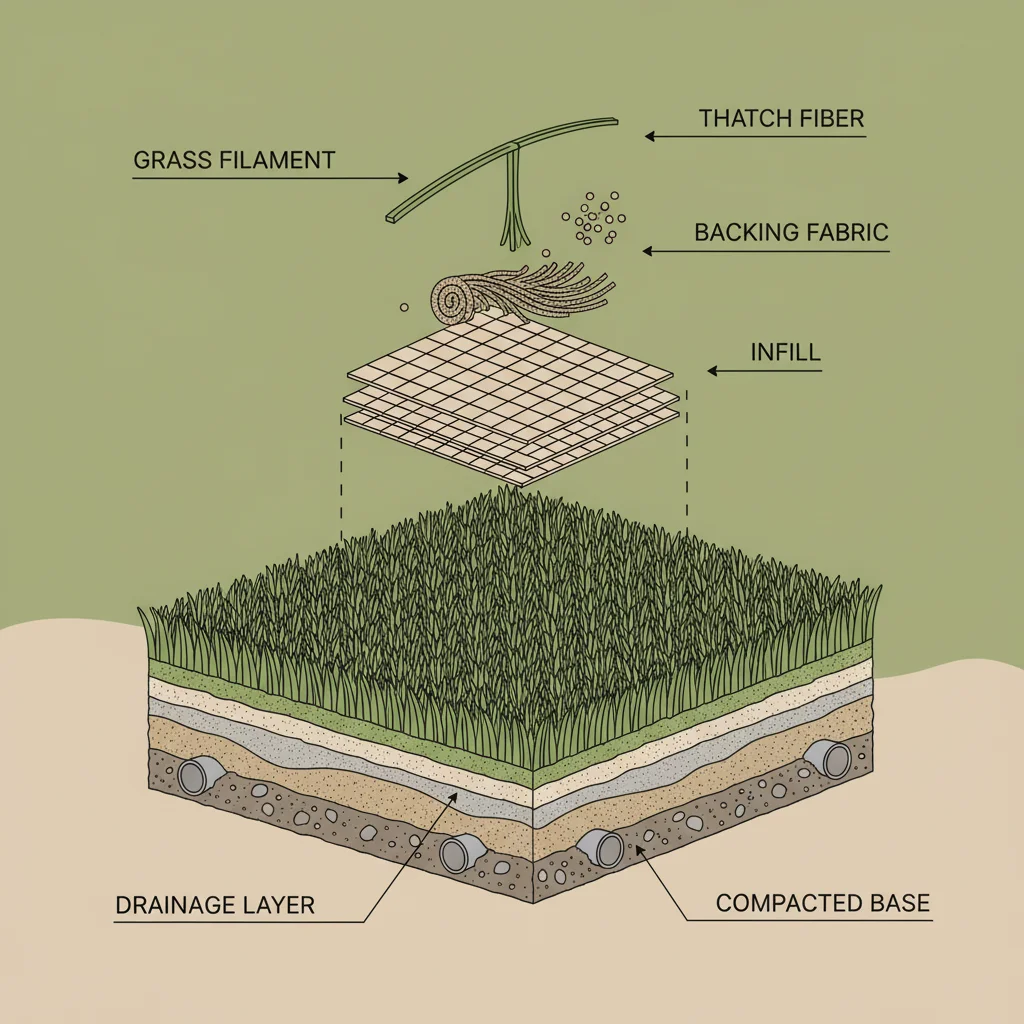
Understanding the fluctuations in football grass price is essential for sports facility managers, municipal planners, and private investors looking to balance initial capital expenditure with long-term operational durability. As the demand for high-performance athletic surfaces grows globally, the cost of synthetic turf is no longer just about the raw material, but about the integrated value of player safety, maintenance reduction, and environmental sustainability.
Across international markets, the volatility of polymer prices and the introduction of advanced recycled materials have created a complex pricing landscape. Whether you are installing a professional FIFA-certified stadium or a community five-a-side pitch, the football grass price is influenced by a variety of technical specifications including pile height, stitch rate, and the type of infill used to simulate natural soil.
By analyzing the core drivers of cost, stakeholders can make informed decisions that prevent overspending while ensuring the pitch meets the rigorous demands of competitive play. This guide provides a comprehensive breakdown of the economic and technical factors that determine the final investment for synthetic football surfaces, ensuring you get the highest value for your budget.

Global Economic Drivers of Football Grass Price
The global football grass price is heavily tied to the petrochemical industry, as most synthetic fibers are derived from polyethylene (PE) and polypropylene (PP). Fluctuations in crude oil prices directly impact the cost of raw resin, which in turn shifts the wholesale price of the turf. Furthermore, international shipping costs and customs tariffs can add significant overhead to the final delivered price, especially for large-scale stadium projects requiring high-volume imports.
Beyond raw materials, labor markets in manufacturing hubs like China and Southeast Asia play a critical role. The shift toward automated tufting processes has helped stabilize production costs, but the demand for specialized, high-performance fibers—such as those with enhanced UV resistance—often pushes the premium price point higher. Understanding these macro-economic drivers allows buyers to time their purchases during market dips.
Technical Specifications Affecting Turf Costs
When evaluating the football grass price, the first technical variable to consider is the Dtex (yarn linear density). A higher Dtex indicates a thicker, stronger fiber, which increases the durability of the pitch under heavy use but also raises the material cost. Professional-grade pitches typically utilize higher Dtex fibers to ensure the grass does not flatten over time, which is a critical requirement for FIFA-standard facilities.
Pile height and stitch rate also play a pivotal role. A denser stitch rate (more stitches per square meter) provides a more uniform surface and better stability for the athlete's foot, though it requires more raw material and longer machine time, thus increasing the price. Similarly, longer pile heights are often preferred for luxury landscapes or specific sport types, but they may require more infill to stay upright, adding to the overall installation budget.
Finally, the backing system—whether it is a primary woven layer or a reinforced polyurethane coating—determines the turf's dimensional stability. Premium backing prevents the grass from shrinking or expanding during extreme temperature swings. While this increases the initial football grass price, it significantly reduces the risk of seam failure and costly repairs in the future.
Cost Efficiency and Long-Term ROI
Achieving cost efficiency isn't about finding the lowest football grass price, but about optimizing the Total Cost of Ownership (TCO). A cheaper, low-grade turf may save money today but will likely require replacement in three years due to fiber degradation or loss of resilience, whereas a premium product can last a decade.
The long-term Return on Investment (ROI) is realized through the drastic reduction in maintenance costs. Unlike natural grass, which requires constant irrigation, mowing, fertilization, and reseeding—all of which contribute to a hidden, recurring football grass price—synthetic turf offers a predictable, low-cost maintenance schedule focused primarily on brushing and occasional infill top-ups.
Furthermore, the ability to host games 24/7, regardless of weather conditions, allows facility owners to maximize revenue. By increasing the hours of operation and eliminating "muddy season" closures, the initial investment in high-quality synthetic turf pays for itself far faster than traditional organic alternatives.
Comparing Installation Methods and Price Points
The total project cost is a combination of the material football grass price and the installation complexity. For example, a simple sand-based sub-base is cost-effective for community parks, whereas a professional shock-pad system—which adds a layer of foam beneath the turf—is essential for player safety and joint protection in professional leagues, significantly increasing the per-square-meter cost.
Additionally, the choice of infill—whether it be SBR rubber granules, TPE, or organic cork—varies wildly in price. While SBR is the most economical option, TPE and cork are increasingly popular due to their lower heat retention and eco-friendly profiles, though they carry a higher premium.
Analysis of Football Grass Price by System Grade
Regional Market Applications and Pricing
In arid regions such as the Middle East, the football grass price is often viewed as a necessary investment rather than a luxury, as the cost of maintaining natural grass in a desert climate is prohibitively expensive and ecologically irresponsible. In these markets, high-UV stabilized turf is the standard, commanding a premium price to prevent fading and brittleness under intense sunlight.
Conversely, in European and North American markets, the trend is shifting toward "hybrid" solutions. These combine synthetic fibers with natural grass, offering the aesthetics of a real pitch with the durability of synthetic turf. While the initial hybrid football grass price is higher due to the complex installation and biological requirements, it is the gold standard for top-tier professional stadiums.
Sustainability and the Price of Eco-Friendly Grass
The industry is currently undergoing a "green revolution," which is subtly altering the football grass price structure. Recycled polyethylene, sourced from ocean plastics or post-consumer waste, is becoming more common. While the research and development for these materials initially raised costs, economies of scale are now making eco-friendly turf competitive with traditional virgin plastic options.
Beyond the fibers, the move away from crumb rubber (SBR) toward organic infills like cork or coconut husk has a significant impact on pricing. Organic infills are more expensive to produce and transport, but they offer a cooler playing surface and eliminate the environmental concerns associated with microplastics.
For many NGOs and government-funded projects, the slightly higher football grass price for sustainable materials is justified by the ability to meet ESG (Environmental, Social, and Governance) criteria and reduce the long-term environmental footprint of the sports facility.
Future Innovations in Turf Pricing Models
Looking ahead, we expect the football grass price to be influenced by "smart turf" technology. The integration of sensors into the turf backing to monitor player movement, heat maps, and pitch wear is already in early stages. These high-tech additions will create a tiered pricing model where "data-ready" pitches command a significant premium over traditional surfaces.
Furthermore, automation in the manufacturing process—specifically the use of 3D weaving and AI-driven quality control—is expected to lower the price of high-performance turf, making professional-grade surfaces accessible to smaller community clubs. This democratization of quality will likely lead to a shift in how we calculate value, moving from a simple "price per square meter" to a "performance per dollar" metric.
As circular economy policies become law in more regions, we will likely see "turf-as-a-service" models. Instead of a massive upfront football grass price, owners may pay a subscription for installation, maintenance, and guaranteed recycling at the end of the product's life cycle.
Comparison of Synthetic Turf Tiers and Cost Factors
| Turf Tier | Typical Fiber Dtex | Relative Price Point | Expected Lifespan |
|---|
| Basic Recreation | 8,000 - 10,000 | Low | 3-5 Years |
| Community Club | 11,000 - 13,000 | Moderate | 5-8 Years |
| Professional Academy | 14,000 - 16,000 | High | 8-10 Years |
| FIFA Certified | 16,000+ | Premium | 10+ Years |
| Eco-Recycled Grade | 12,000 - 15,000 | Moderate-High | 7-10 Years |
| Hybrid Integrated | Mixed Poly/Natural | Ultra-Premium | Variable |
FAQS
The variance in football grass price usually stems from the quality of the raw polymer, the Dtex of the yarn, the stitch density, and the brand's certification (e.g., FIFA Quality Pro). Cheaper options often use lower-density fibers and thinner backing, which reduces the initial cost but significantly shortens the lifespan of the pitch.
Yes, infill is a major component of the overall football grass price. SBR rubber is the most affordable, while TPE, cork, or organic infills can increase the cost by 20% to 50%. However, organic infills provide better heat management and are more environmentally friendly, which may be a priority for certain projects.
If the backing is still intact but the fibers are worn, a deep clean and infill top-up can extend the life of the pitch. However, if the turf is exhibiting significant "matting" or the backing has degraded, paying the football grass price for a full replacement is usually more cost-effective than repeated, temporary repairs.
Compare the technical data sheets (TDS) rather than just the quote. Look for the Dtex, pile height, and UV stabilization ratings. A fair football grass price for professional turf should reflect these high-performance specs and include a manufacturer's warranty of at least 5-8 years.
Almost always. Low-cost turf tends to flatten faster, requiring more frequent brushing and more frequent infill replacements to maintain playability. By investing in a mid-to-high range football grass price, you reduce the labor and material costs associated with monthly upkeep.
While you save on labor, DIY installation for football pitches is risky. Improper sub-base preparation or poor seam welding can lead to pitch failure. Most manufacturers will void the warranty if a certified installer is not used, making the professional football grass price a safer long-term bet.
Conclusion
Navigating the complexities of football grass price requires a balanced understanding of material science, initial investment, and long-term operational costs. From the impact of raw polymer markets to the added value of FIFA certifications and eco-friendly infills, the cost of a synthetic pitch is a reflection of its intended use, durability, and safety standards. By focusing on the total cost of ownership rather than the lowest upfront quote, facility owners can ensure a high-performance surface that serves athletes and communities for years to come.
As the industry moves toward smarter, more sustainable materials, the value proposition of synthetic turf continues to evolve. We recommend that stakeholders prioritize high-Dtex fibers and sustainable infill options to future-proof their investments against changing environmental regulations. For those looking to optimize their budget without sacrificing quality, consulting with a technical expert to align specifications with actual usage patterns is the most effective strategy. Visit our website for more professional insights and quotes: www.xy-grass.com