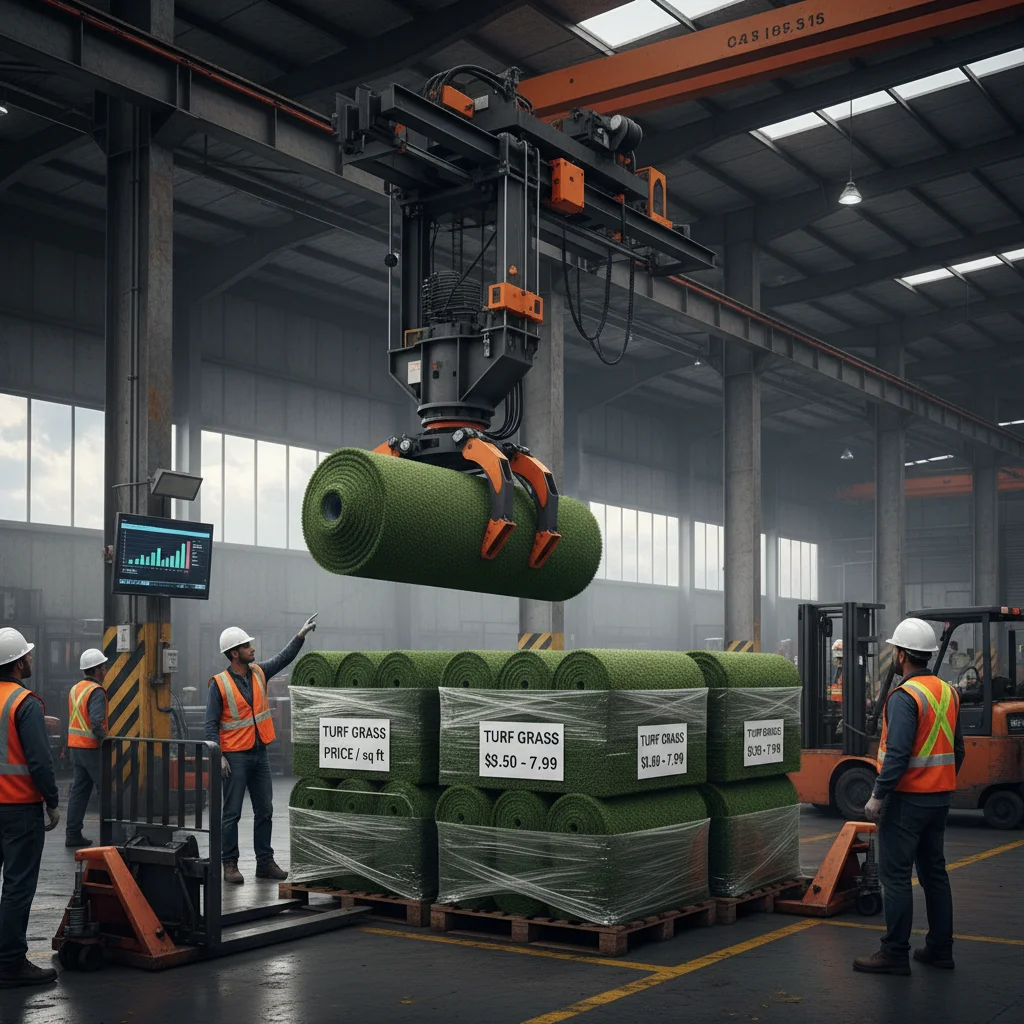
When planning a professional golfing surface, understanding the cost of turf per square metre is the first step toward balancing initial investment with long-term performance. Whether you are designing a luxury hotel putting green or a high-traffic driving range, the price is rarely a flat fee but rather a reflection of the material's density, fiber technology, and durability standards.
Globally, the shift toward synthetic surfaces is driven by the need for consistency and sustainability. In an era of water scarcity and rising maintenance labor costs, analyzing the cost of turf per square metre allows developers to transition from recurring operational expenses to a one-time capital investment that guarantees a 365-day playing window.
However, the cheapest option is rarely the most economical. By examining the technical specifications—such as the S-shape yarn of the GG15 Golf Grass—it becomes clear that a slightly higher cost of turf per square metre often translates to superior abrasion resistance and a significantly lower total cost of ownership over the product's lifecycle.

Global Industry Standards for Cost of Turf per Square Metre
The global market for artificial golf surfaces has evolved from simple plastic carpets to highly engineered polymers. Today, the cost of turf per square metre is benchmarked against international standards of durability and environmental safety. With the rise of urban sports complexes in Asia and luxury residential greens in North America, the demand for materials that balance cost with "professional-grade" playability has never been higher.
Industry data suggests that high-performance turfs like the GG15, which utilize Polyethylene (PE) and S-shape yarn, are becoming the gold standard. While the initial cost of turf per square metre may be higher than basic landscape grass, the reduction in water consumption and the elimination of chemical pesticides align with global ISO environmental goals, making it a sustainable choice for modern developers.
Defining the Value of Cost of Turf per Square Metre
When we discuss the cost of turf per square metre, we are not just talking about a price tag, but a value proposition. This metric encompasses the raw material costs of high-density Polyethylene, the precision of the 3/16 inch machine gauge, and the complexity of the PP composite geotextile backing. For a golf professional, "value" is defined by the consistency of the ball roll and the resilience of the pile.
In practical terms, this cost reflects the product's ability to withstand "lodging"—the flattening of grass fibers under heavy foot traffic. A budget turf may have a lower square metre cost but will fail under the weight of maintenance equipment, leading to premature replacement. In contrast, a premium turf engineered for high-impact ball strikes maintains its structural integrity, providing a lower "cost per year" of use.
Ultimately, the cost of turf per square metre is a critical calculation for ROI. By integrating UV-stabilizers and high-efficiency drainage (up to 60L/min/m²), the initial investment protects the asset from solar degradation and water damage, ensuring that the aesthetic and functional quality remains elite for years.
Technical Factors Influencing Cost of Turf per Square Metre
The primary driver of the cost of turf per square metre is the fiber composition and yarn geometry. For instance, the GG15 utilizes an S-shape yarn structure, which is significantly more complex to manufacture than standard linear fibers. This shape allows the grass to "spring back" after being stepped on, which is essential for professional putting greens.
Another critical factor in the cost of turf per square metre is the density and dtex. With a pile dtex of 5000 and a total density of 63,000 stitches/m², the GG15 provides a lush, thick surface that prevents the backing from being exposed. This high density requires more raw material per square metre, increasing the price but drastically improving the turf's lifespan.
Finally, the backing material and UV additives contribute to the total cost of turf per square metre. A professional PP composite backing (120g/m²) ensures the turf doesn't stretch or shrink, while anti-UV additives prevent the green hue from fading under scorching sun, maintaining a professional look without the need for costly re-dyeing or replacement.
Cost Efficiency and Performance Metrics
To truly understand the cost of turf per square metre, one must compare it against performance KPIs. In the golf industry, the two most important metrics are "resilience" (the ability to recover shape) and "permeability" (how fast water drains). A turf that costs less upfront but lacks high-efficiency drainage will lead to ponding, which ruins the playing experience and increases maintenance labor.
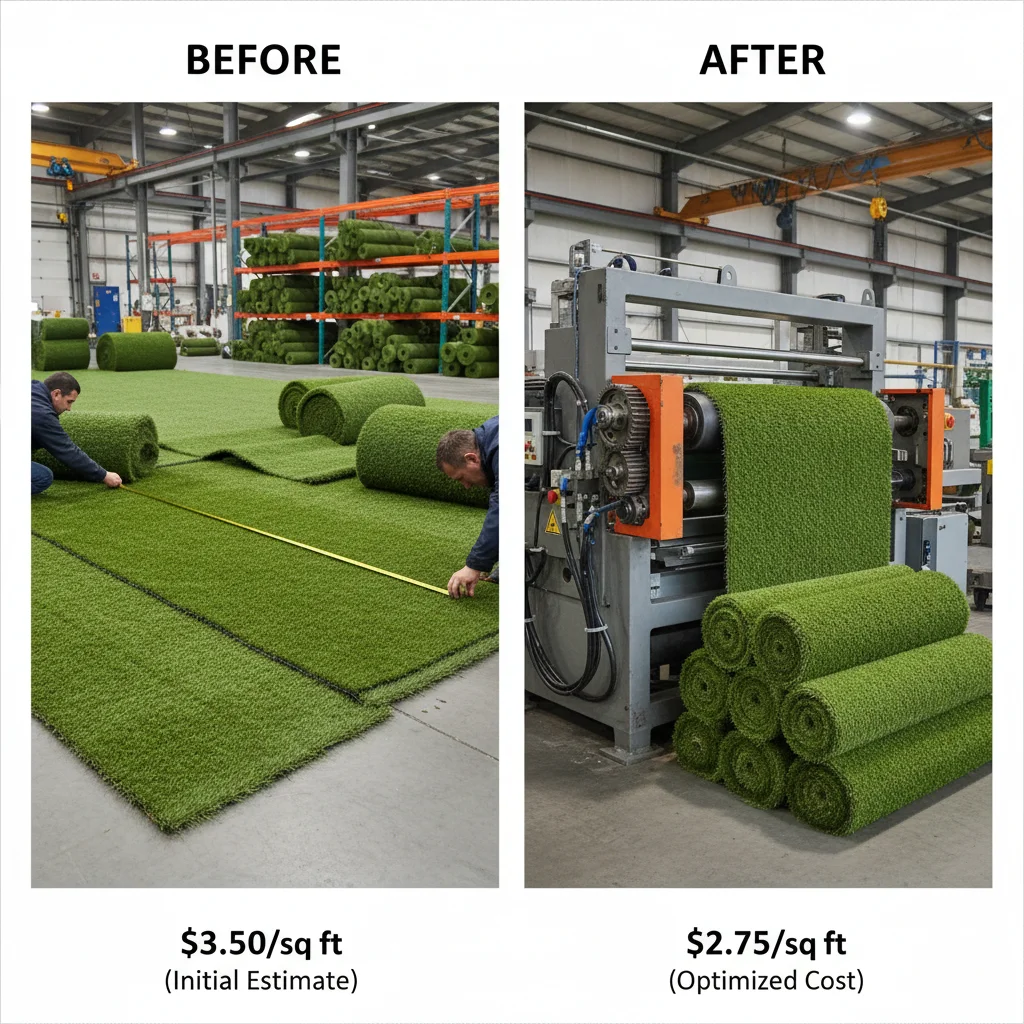
When analyzing the cost of turf per square metre, we also consider installation efficiency. Advanced splicing technology used in premium products reduces the construction period and lowers labor costs, effectively offsetting a higher material price with lower installation expenses.
Performance Analysis vs Cost of Turf per Square Metre
Global Applications of High-Performance Turf
The application of specialized turf varies by region, but the focus remains on the cost of turf per square metre relative to usage. In luxury hotel leisure zones and resorts, the priority is aesthetics and a "soft touch," making the GG15's PE composition ideal. Here, the cost is justified by the enhanced guest experience and the prestige of a perfectly manicured green.
In commercial settings, such as professional driving ranges or sport clubs, the cost of turf per square metre is weighed against the volume of traffic. Because GG15 is engineered to resist abrasion from heavy equipment rolling and constant ball strikes, it prevents the frequent "patch-repair" cycles common with lower-grade alternatives, making it the most cost-effective choice for high-revenue commercial zones.
Long-Term Value and ROI Analysis
To accurately calculate the ROI, one must look beyond the initial cost of turf per square metre and evaluate the "Total Cost of Ownership" (TCO). Natural grass requires a continuous cycle of irrigation, fertilization, and chemical pesticides, creating a perpetual operational expenditure (OpEx). In contrast, GG15 artificial turf represents a one-time capital expenditure (CapEx) with negligible maintenance costs.
From a sustainability perspective, the cost of turf per square metre includes the hidden value of water conservation. In drought-prone regions, the cost of maintaining natural grass can exceed the initial installation cost of artificial turf within just a few years. The GG15's eco-friendly, non-toxic materials also ensure that there are no costly environmental cleanup requirements.
Furthermore, the durability of PE fibers ensures that the playing surface remains consistent. In the golf world, "consistency" equals "quality." By avoiding the seasonal brown-outs and weather-dependency of natural grass, businesses can operate 365 days a year, maximizing their revenue streams and quickly recouping the cost of turf per square metre.
Future Innovations in Turf Cost Optimization
The future of the cost of turf per square metre lies in the intersection of material science and automation. We are seeing a trend toward "smart fibers" that can better regulate temperature and provide even higher resilience. As manufacturing processes for S-shape yarns become more efficient, the gap between premium performance and accessible pricing will continue to close.
Digital transformation in the installation phase is also reducing the overall project cost. Using precision mapping and advanced splicing technology, the wastage of material is minimized, effectively lowering the real-world cost of turf per square metre by ensuring that every centimeter of product is utilized optimally.
Additionally, the industry is moving toward a circular economy. Future turf products are being designed for easier recyclability at the end of their life cycle. This means that the long-term value of the cost of turf per square metre will eventually include a "recovery value," where old turf can be processed back into new raw materials, further reducing the environmental and financial footprint.
Comparative Analysis of Turf Investment and Lifecycle Value
| Turf Type | Initial Cost per Sqm | Maintenance Level | Expected Lifespan |
|---|
| Natural Golf Grass | Low (Initial) | Extreme (High OpEx) | Seasonal/Perpetual |
| Basic Artificial Turf | Low | Moderate | 3-5 Years |
| GG15 Golf Grass | Medium-High | Ultra-Low | 8-12 Years |
| Professional Sport Turf | High | Low | 10+ Years |
| Luxury Hotel Turf | High | Low | 7-10 Years |
| Industrial Landscape Turf | Medium | Low | 6-8 Years |
FAQS
Professional golf grass, like the GG15, typically has a higher cost per square metre due to its specialized S-shape yarn and higher stitch density (63,000 stitches/m²). While residential turf focuses on aesthetics and soft feel, professional turf is engineered for extreme durability, high-impact ball strikes, and rapid drainage (60L/min/m²), which justifies the premium price through longer lifespan and better playability.
Not necessarily, but premium products usually integrate high-performance backing. For example, the GG15 uses a professional PP composite geotextile backing specifically designed for rapid water permeability. When evaluating cost, check the permeability rating (e.g., 60L/min/m²) rather than just the price, as this ensures your investment won't suffer from ponding after heavy rain.
Yes, because UV resistance requires the integration of advanced anti-UV additives during the PE fiber extrusion process. These additives prevent the polymers from breaking down under solar radiation. While this adds to the initial cost per square metre, it prevents the turf from fading and becoming brittle, saving you from expensive replacement costs every few years.
The most effective way to reduce costs is through professional installation and precision planning. Using a product with advanced splicing technology reduces labor hours and material waste. Additionally, investing in a high-durability turf like GG15 reduces the "cost over time" by eliminating the need for mowing, fertilization, and frequent repairs associated with cheaper alternatives.
The S-shape yarn structure does increase the manufacturing complexity, which can influence the cost per square metre. However, the value it provides—superior resilience and recovery—is indispensable for golf applications. It ensures the fibers stand back up after being stepped on, maintaining a professional playing surface that standard linear yarns cannot match.
Generally, the "cost per square metre" refers to the material cost. Installation is typically quoted separately based on the base surface (concrete vs. soil) and the complexity of the landscape. However, choosing a product that is "easy to install" with professional backing can significantly lower those secondary labor costs.
Conclusion
In summary, calculating the cost of turf per square metre is about more than just the initial purchase; it is an analysis of durability, performance, and long-term sustainability. By choosing a high-specification product like the GG15 Golf Grass—with its S-shape PE fibers, high density, and superior drainage—investors can secure a professional-grade surface that eliminates the recurring expenses of natural grass maintenance while providing a consistent, all-weather playing experience.
As the industry moves toward more eco-friendly and technologically advanced materials, the value proposition of artificial turf continues to strengthen. We recommend focusing on the total lifecycle ROI rather than the lowest entry price to ensure your project remains vibrant and functional for a decade or more. Elevate your golf experience today by investing in quality that lasts. Visit our website: www.xy-grass.com