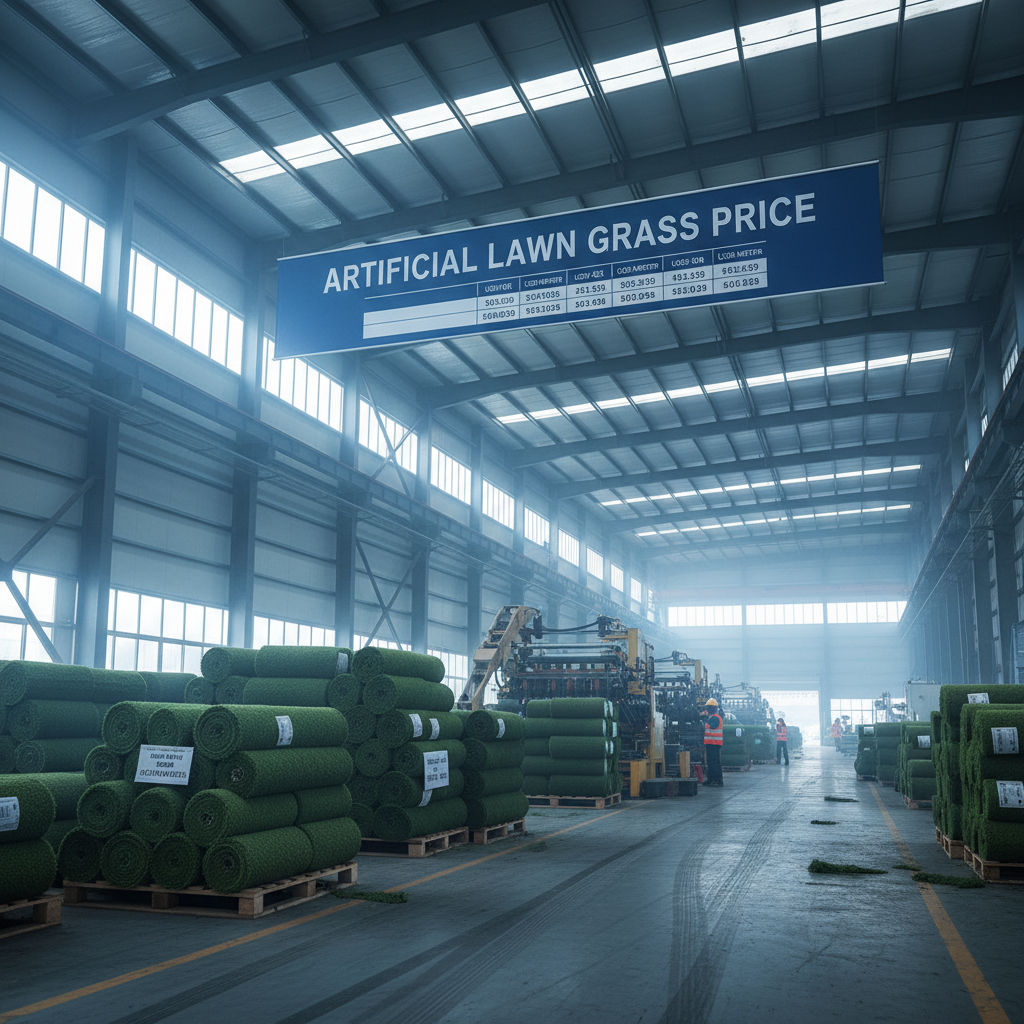

Understanding the artificial grass price per m2 requires a deep dive into the technical specifications and manufacturing overheads associated with synthetic turf. For commercial developers and landscape architects, the cost is not a static figure but a variable determined by yarn quality, face weight, and the intended durability of the installation. This guide examines the financial drivers that dictate market pricing for high-end synthetic lawns.
In the B2B sector, procurement specialists must distinguish between entry-level residential turf and professional-grade landscaping solutions. The pricing variance typically stems from the raw material costs of Polyethylene (PE) and Polypropylene (PP), as well as the complexity of the backing system. Factors such as UV resistance and water permeability directly influence the long-term ROI, making a simple price-per-square-meter comparison insufficient for high-traffic projects.
Readers will learn how to evaluate technical parameters like stitch rate and pile height to determine if a quote is fair and aligned with industry standards. By analyzing the relationship between product specifications and cost, buyers can optimize their budget without sacrificing the aesthetic or structural integrity of their evergreen sanctuary. We will explore the specific value proposition of advanced series like the GG25 to illustrate these principles.
Analyzing Synthetic Turf Valuation Drivers
The valuation of synthetic turf is fundamentally rooted in the volume of raw polymers used and the precision of the weaving process. High-quality turf utilizes a blend of PE and PP to balance softness with structural resilience. For instance, an M-shaped yarn provides better memory and resilience, preventing the grass from flattening under foot traffic, which naturally increases the production cost compared to standard flat yarns. Furthermore, the use of multi-tone color blends—such as combining field green, apple green, and olive green with brown thatch—requires more complex extruding processes, contributing to a higher price point but providing a more lifelike appearance. In the context of artificial grass price per m2, these technical nuances define the gap between budget options and premium commercial grades. Integrated manufacturing, where extruding, weaving, and coating happen under one roof, often allows for more competitive pricing by eliminating intermediary markups, a strategy employed by specialized manufacturers to maintain a balance between quality and cost.
Strategic Cost Analysis for B2B Procurement
When evaluating quotes for large-scale projects, procurement officers must look beyond the initial invoice. The cost of synthetic turf is a reflection of its engineering; higher density and superior drainage capabilities reduce maintenance costs and extend the replacement cycle. The following sections break down the specific technical variables that move the needle on pricing.
Material Composition and Base Cost
The base cost is primarily driven by the dtex (linear density) of the yarn. A higher dtex, such as 8500, indicates a thicker, more robust fiber that withstands wear and tear. The combination of PP and PE ensures the turf is both soft to the touch and UV-stable. Low-cost alternatives often omit the brown thatch layer, which not only reduces the realistic look but also diminishes the support for the green blades.
| Material Grade | Typical Dtex | Durability Level | Price Impact |
|---|---|---|---|
| Budget PP | 4000-6000 | Low | Low |
| Standard PE/PP | 6000-8000 | Medium | Moderate |
| Premium M-Shape | 8000-10000 | High | Higher |
| Commercial Grade | 10000+ | Very High | Premium |
| Luxury Blend (GG25) | 8500 | High | Balanced |
| Specialized Sports | Variable | Maximum | Highest |
Pile Density and Stitch Rate Impact
Density is measured by the number of stitches per square meter. A product with 15,750 stitches/m2, like the GG25 series, provides a plush, dense feel that prevents the backing from showing through. Increasing the stitch rate from 120 to 150 stitches/m requires more raw material and slower machine speeds, which directly elevates the cost per unit area but significantly improves the aesthetic and comfort.
Drainage Technology and Backing Systems
The backing is the unsung hero of synthetic turf. A high-performance latex-backed system with precisely gauged drainage holes (e.g., 10cm gauge) allows water to permeate at rates up to 60L/min/m2. This prevents pooling and anaerobic growth. Advanced backing is more expensive to produce than simple perforated sheets but is essential for climates with heavy rainfall to avoid costly site drainage failures.
UV Stabilization and Lifespan Value
UV-stabilized PE ensures that the vibrant 4-color blend does not fade under intense sunlight. The cost of high-grade UV inhibitors is an upfront investment that prevents the "blueing" or "yellowing" effect seen in cheap turf. A 5-year warranty usually indicates a higher tier of stabilization, meaning the product maintains its structural integrity and color for a longer period.
Application-Specific Grade Selection
Pricing varies by intended use. Residential garden grass focuses on softness and aesthetics, whereas commercial turf prioritizes tuft lock strength (≥40N). Selecting a residential grade for a commercial area leads to premature failure, while using sports-grade turf for a small garden is an unnecessary expense. Matching the specification to the foot-traffic level is the key to cost optimization.
Volume Procurement vs. Retail Pricing
In B2B transactions, purchasing standardized rolls (2m/4m width, 25m length) reduces waste and lowers the per-square-meter cost. Direct sourcing from manufacturers who control the entire chain—from extruding to international trade—eliminates the "middleman cut," providing a more competitive price point for large projects compared to buying from local distributors.
Total Cost of Ownership (TCO)
The initial purchase price is only one part of the equation. TCO includes installation, occasional brushing, and eventually, replacement. High-quality turf with a high tuft lock strength and non-toxic, lead-free materials avoids the legal and health risks associated with low-grade chemicals, while its durability reduces the frequency of replacement, offering a better long-term financial return.
FAQ
What factors most influence the cost of synthetic turf per square meter?
The primary cost drivers are the raw material quality (PE vs PP), the pile density (stitches per m2), the pile height, and the complexity of the backing system. For example, a high-density product with 15,750 stitches/m2 and a specialized latex backing for drainage will cost more than a low-density, single-color turf with basic perforation.
Is higher density always better for commercial landscaping?
Generally, yes. Higher density provides a more luxurious feel and better resilience against flattening in high-traffic areas. However, for purely decorative areas with zero foot traffic, a medium-density turf may be more cost-effective without sacrificing visual appeal. For commercial use, a tuft lock strength of ≥40N is recommended.
How does the drainage system affect the long-term value of the investment?
An efficient drainage system, such as the one in the GG25 series with a 60L/min/m2 permeability rate, prevents water pooling and standing water. This protects the sub-base from erosion and prevents the growth of mold or algae, significantly reducing maintenance costs and extending the functional lifespan of the installation.
Are there safety certifications I should check when comparing suppliers?
Yes, especially for residential or public areas. Ensure the product is non-toxic and lead-free. Check for compliance with REACH and ROHS standards. These certifications guarantee that the materials are safe for children and pets, which is a critical value-add for high-end residential projects.
Why is direct factory sourcing cheaper than using a distributor?
Direct sourcing removes multiple layers of profit margins. Manufacturers who integrate extruding, weaving, and coating can optimize their production costs and offer the most competitive pricing. Additionally, direct communication allows for better customization of pile height and density to meet specific project needs.
How long does a premium synthetic lawn typically last?
While warranties may range (e.g., 5 years for the GG25 series), high-quality UV-stabilized PE fibers can last significantly longer with proper maintenance. Regular brushing and the use of high-grade materials prevent premature degradation, making the initial higher investment more economical over a 10-15 year horizon.
References and further reading
- Artificial Grass - Wikipedia: Comprehensive overview of synthetic turf materials and history.
- International Standards for Synthetic Turf: Guidelines on UV resistance and fire retardancy.
- Landscape Architecture Manual: Best practices for synthetic turf drainage and sub-base preparation.
Related Articles