The global demand for sustainable and low-maintenance landscaping has propelled the role of artificial grass suppliers to the forefront of the urban development industry. As cities expand and water scarcity becomes a critical concern, the transition from natural turf to high-performance synthetic alternatives is no longer just a luxury but a strategic necessity for commercial and residential property management.
Modern synthetic turf technology has evolved far beyond the basic plastic carpets of the past, now integrating complex polymers and drainage systems to mimic the biological properties of real grass. Selecting the right partners among various artificial grass suppliers ensures that projects maintain aesthetic appeal while meeting rigorous safety and environmental standards, such as being lead-free and non-toxic.
For those seeking professional-grade solutions for commercial landscaping or large-scale residential gardens, partnering with experienced artificial grass suppliers provides access to specialized products like the Garden Grass series, which blends field green and olive green tones to create a truly lifelike outdoor environment.

The Global Role of Artificial Grass Suppliers
In the contemporary architectural landscape, artificial grass suppliers serve as the bridge between industrial polymer science and aesthetic environmental design. By providing materials that withstand heavy foot traffic and extreme weather, these suppliers enable the creation of "evergreen" spaces in regions where natural grass cannot survive due to soil salinity or lack of precipitation.
The industry has shifted toward highly specialized offerings, moving away from one-size-fits-all products to targeted series. For instance, the focus on "Garden Grass" ensures that commercial developers can achieve a naturalistic look with brown thatch and multi-tonal greens, reducing the carbon footprint associated with constant mowing and chemical fertilization.
Defining Quality in Synthetic Turf Sourcing
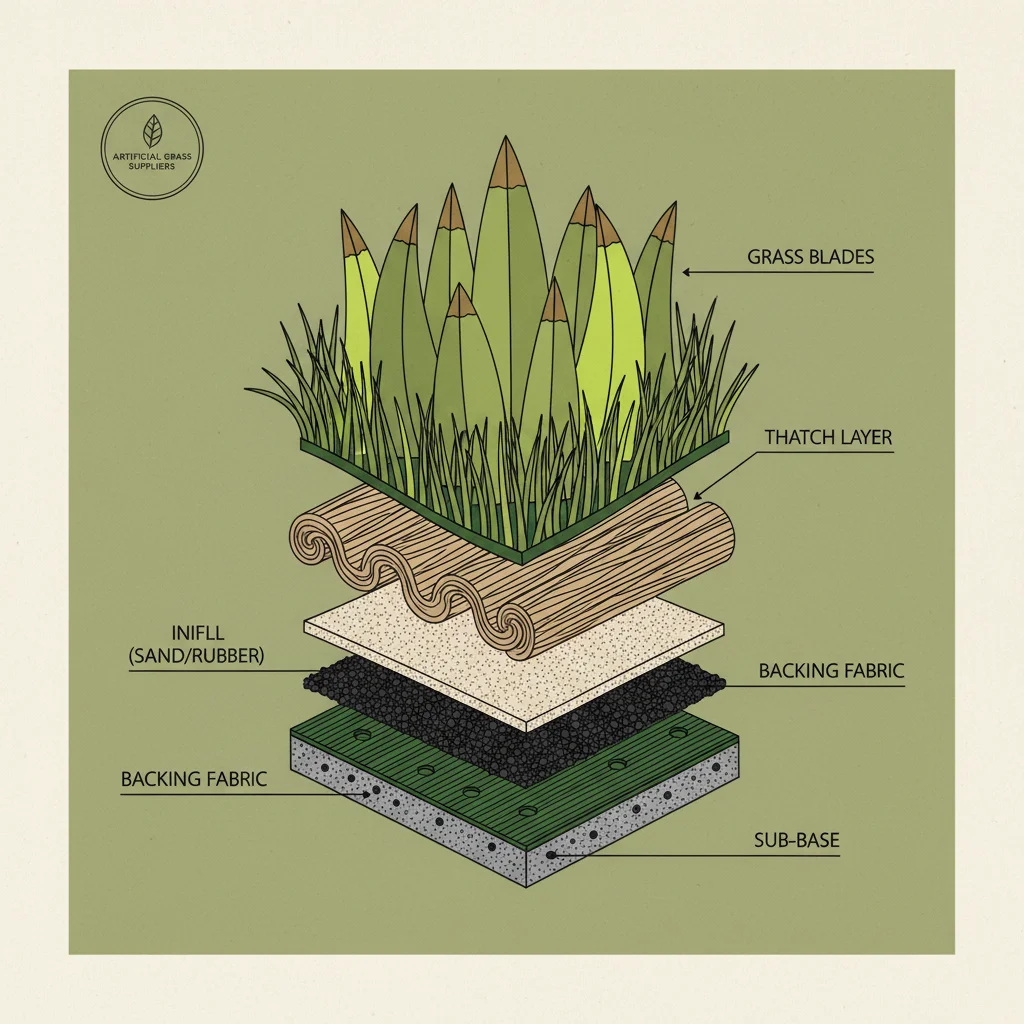
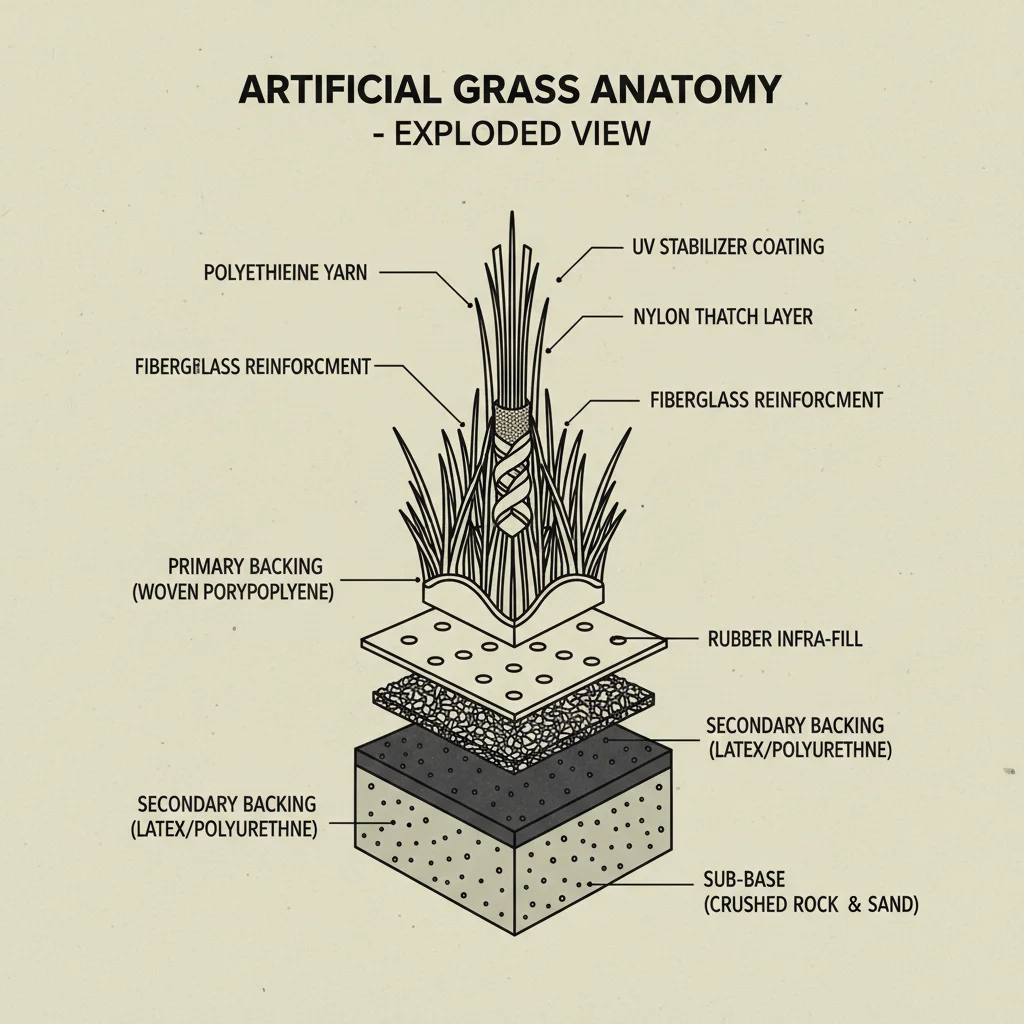
When evaluating artificial grass suppliers, the primary metric for quality is the composition of the yarn and the stability of the backing. High-end products utilize a blend of Polypropylene (PP) and Polyethylene (PE), which balances the structural rigidity needed for the pile to stand upright with the softness required for human contact.
Another critical factor is the "Dtex" or yarn linear density. A higher Pile Dtex, such as 8500, indicates a more robust fiber that resists flattening over time. This technical specification is what separates industrial-grade turf from low-cost alternatives that lose their luster within a few seasons.
Furthermore, the security of the tuft lock is paramount. A tuft lock strength of ≥40N ensures that the grass blades remain firmly anchored to the geotextile fabric even under significant tension, which is a hallmark of reliable artificial grass suppliers.
Technical Components of Premium Garden Grass
The architectural integrity of synthetic turf depends on the precision of the machine gauge and stitch rate. Leading artificial grass suppliers employ a 3/8 inch gauge with a stitch rate of 150 stitches per meter, resulting in a dense coverage of 15,750 stitches/m², which prevents the backing from showing through.
A standout feature of premium offerings is the integration of a latex-backed drainage system. Professional artificial grass suppliers design these systems to maintain a water permeability of 60L/min/m², ensuring that rainfall is processed efficiently without leaving standing water on the surface.
Beyond drainage, the visual realism is achieved through a "4-color Green" palette. By blending field green, apple green, and olive green with a brown thatch base, artificial grass suppliers can replicate the organic irregularity of a natural meadow, making it ideal for high-end residential gardens.
Performance Metrics and Durability Standards
Durability in synthetic turf is measured by the resilience of the pile height and the quality of the geotextile fabric. With a pile height of 45mm and a total carpet height of 48mm, the Garden Grass series provides a plush feel that mimics natural lawn density while remaining easy to maintain.
The underlying support comes from a PP composite and mesh fabric weighing 120 g/m². This structure provides the necessary tensile strength to prevent stretching, a critical requirement that distinguishes top-tier artificial grass suppliers from budget manufacturers.
Comparative Performance of Turf Sourcing Methods
Global Applications and Use Cases
In commercial landscaping, the use of synthetic turf is expanding rapidly across hotel rooftops and corporate plazas. By sourcing from reputable artificial grass suppliers, developers can create inviting green spaces in high-traffic urban zones where natural irrigation is logistically impossible.
In residential sectors, the Garden Grass series is particularly effective for large backyard applications. The non-toxic, lead-free material ensures safety for children and pets, while the drainage rate of 30 inches per hour prevents the common issue of water pooling after heavy rain.
Long-Term Value and Environmental Impact
The economic value of switching to synthetic turf lies in the drastic reduction of operational costs. Homeowners and business owners eliminate the need for weekly mowing, seasonal seeding, and expensive irrigation systems, making the initial investment from artificial grass suppliers a cost-effective decision over a 5-year horizon.
From a sustainability perspective, the elimination of chemical fertilizers and pesticides prevents harmful runoff into local water tables. This environmental advantage, coupled with a 5-year warranty on high-quality products, provides a sense of security and trust for the end-user.
Furthermore, the use of PP and PE composites ensures a product life cycle that minimizes waste. By choosing durable materials, the frequency of replacement is reduced, further aligning with global goals for sustainable urban consumption.
Future Innovations in Turf Manufacturing
The next frontier for artificial grass suppliers is the integration of "smart" materials and bio-based polymers. Research is currently focusing on reducing the reliance on petroleum-based plastics while maintaining the 40N tuft lock strength and UV resistance required for outdoor longevity.
Automation in the weaving process is also improving the consistency of the 3/8 inch gauge and stitch rate, allowing for even higher density and a more natural "bounce" to the grass pile. This will likely lead to the development of turf that is indistinguishable from natural grass even upon close inspection.
Digital transformation in the supply chain is enabling customized roll widths (beyond the standard 2m/4m) and precise color matching for specific architectural requirements, empowering artificial grass suppliers to offer bespoke solutions for unique landscapes.
Technical Specification Analysis of Garden Grass Series
| Technical Parameter | Specification Value | Performance Impact | Quality Grade (1-10) |
|---|
| Pile Height | 45mm / 48mm Total | Enhanced plushness and realism | 9 |
| Yarn Composition | PP + PE Blend | Balance of softness and durability | 8 |
| Drainage Rate | 60L/min/m2 | Prevents standing water pools | 10 |
| Tuft Lock Strength | ≥40N | Prevents yarn shedding | 9 |
| Stitch Density | 15750 stitches/m2 | High coverage, no visible backing | 9 |
| Material Safety | Non-toxic / Lead-free | Safe for pets and children | 10 |
FAQS
Look for suppliers that provide detailed technical specifications, including tuft lock strength (ideally ≥40N) and a certified drainage rate. Ensure they offer a warranty (such as 5 years) and provide materials that are certified lead-free and non-toxic. Testing a sample for pile density and color realism is also recommended.
Not if you choose a product with a dedicated drainage system. High-quality garden grass typically features a latex-backed design with water permeability of around 60L/min/m2, ensuring a drainage rate of at least 30 inches per hour to keep your lawn dry and usable after rain.
PP (Polypropylene) typically provides structural support and strength, while PE (Polyethylene) is softer and more resistant to UV degradation. The best artificial grass suppliers use a blend of both to ensure the grass is soft to the touch but durable enough to maintain its height.
Yes, provided you source from suppliers who guarantee non-toxic and lead-free materials. Professional-grade synthetic turf is designed for safety and hygiene, and when paired with proper drainage, it provides a clean, allergen-free environment for families and pets.
With a proper installation and a high-quality product featuring a Dtex of 8500 and robust tuft locking, synthetic turf can last significantly longer than 5 years. Many premium products come with a 5-year warranty, but with minimal maintenance, they often remain visually appealing for a decade.
Most standard rolls from artificial grass suppliers come in widths of 2m or 4m. However, many manufacturers can provide custom widths for large-scale commercial projects to minimize seams and ensure a more seamless, natural look across the installation site.
Conclusion
In summary, the selection of reliable artificial grass suppliers is the most critical decision in ensuring the longevity and aesthetic success of any synthetic landscaping project. By focusing on technical parameters—such as the 45mm pile height, 60L/min/m2 drainage capacity, and lead-free material composition—property owners can achieve a lifelike, low-maintenance environment that adds tangible value to their real estate.
As we move toward a future of sustainable urbanism, the integration of high-performance synthetic turf will continue to play a vital role in reducing water consumption and eliminating chemical pollutants. We encourage developers and homeowners to prioritize technical certification and material safety to ensure a durable, beautiful, and eco-friendly landscape. Visit our website for more professional solutions: www.xy-grass.com