Understanding the artificial grass cost per m2 is essential for homeowners, landscape architects, and commercial developers looking to balance aesthetic appeal with long-term financial viability. As urban spaces shrink and the demand for low-maintenance greenery rises, the cost of synthetic turf has become a primary benchmark for evaluating project feasibility across various climates and usage intensities.
From a global perspective, the fluctuation in artificial grass cost per m2 is often driven by raw material costs—specifically polyethylene and polypropylene—and the technological advancements in yarn shaping and UV stabilization. By analyzing these costs, stakeholders can make informed decisions that avoid the pitfalls of cheap, short-lived alternatives while avoiding unnecessary over-expenditure on over-specified products.
Ultimately, calculating the true cost of synthetic turf involves looking beyond the initial purchase price to include installation, base preparation, and the long-term savings on water and chemicals. This guide provides a comprehensive breakdown of how artificial grass cost per m2 is determined and how to maximize the value of your investment for sports, gardens, or commercial applications.

Global Market Drivers of Artificial Grass Cost per m2
The global landscape for synthetic turf is heavily influenced by the volatility of petrochemical markets, as the primary raw materials for grass fibers are PE (Polyethylene) and PP (Polypropylene). When polymer prices spike, the artificial grass cost per m2 typically follows, creating a ripple effect through the supply chain from manufacturers in Asia to installers in North America and Europe.
Furthermore, international trade policies and logistics costs play a significant role. As shipping rates fluctuate and tariffs are applied to imported polymers or finished rolls, the final landed artificial grass cost per m2 can vary significantly, forcing distributors to optimize their inventory and sourcing strategies to remain competitive.
Defining the Metrics of Artificial Grass Cost per m2
When we discuss the artificial grass cost per m2, we are referring to the base price of the synthetic turf material itself, excluding the secondary costs of ground preparation and installation. This metric allows buyers to compare different grades of turf—such as landscape grass versus professional football grass—on a standardized unit of measurement, ensuring an "apples-to-apples" comparison.
In modern industry terms, this cost is not just a price tag but a reflection of the product's technical specifications. A higher artificial grass cost per m2 usually indicates a higher stitch rate, a more durable dtex (yarn linear density), and the inclusion of advanced UV inhibitors that prevent the turf from fading under intense sunlight.
For humanitarian or large-scale urban projects, understanding this metric is crucial for budget allocation. By calculating the total area and multiplying it by the artificial grass cost per m2, project managers can determine if they can afford premium, high-density options or if they need to opt for more economical, low-pile solutions.
Core Factors Influencing Artificial Grass Cost per m2
One of the most critical factors affecting the artificial grass cost per m2 is the yarn density and pile height. For instance, a professional golf turf with a 15mm pile height and a high stitch rate of 63,000 stitches/m2 requires more raw material and machine time, which naturally increases the cost compared to basic decorative grass.
Durability and material composition also play a pivotal role in the artificial grass cost per m2. The use of high-grade PE with specialized anti-UV additives ensures that the grass does not become brittle over time, offering a higher upfront cost but a significantly lower lifecycle cost due to extended longevity.
Finally, the backing system—such as the PP composite geotextile fabric with a weight of 120 g/m2—influences the overall artificial grass cost per m2. A more robust backing with better water permeability (e.g., 60L/min/m2) adds to the manufacturing complexity but prevents ponding and ensures a stable installation.
Comparing Artificial Grass Cost per m2 by Application
Different use cases demand different specifications, which directly impacts the artificial grass cost per m2. For example, football grass requires immense resilience and shock absorption, leading to a higher cost per square meter than garden grass, which primarily focuses on visual aesthetics and soft textures.
Similarly, playground grass must meet strict non-toxic and odorless environmental standards to protect children's health, which involves using higher-purity materials. This regulatory compliance is baked into the artificial grass cost per m2 for safety-certified products.
Comparative Value Analysis of Artificial Grass Cost per m2
Global Use Cases and Cost Implementations
In arid regions like the Middle East, the artificial grass cost per m2 is viewed as a strategic investment in water conservation. By replacing natural lawns with synthetic alternatives, municipalities save millions of gallons of water, making the initial cost negligible compared to the ongoing costs of irrigation and desalination.
In urban European centers, the focus is on versatility. Hotel rooftops and resort balconies often utilize colorful or landscape grass where the artificial grass cost per m2 is balanced against the ability to create "green" zones in areas where soil cannot be supported. This demonstrates that cost is always relative to the environmental constraints of the location.
Long-Term Value vs Initial Artificial Grass Cost per m2
A common mistake among buyers is focusing solely on the lowest artificial grass cost per m2. Cheap turf often suffers from "lodging"—where the fibers flatten and fail to bounce back—and rapid fading due to poor UV protection. This leads to premature replacement, effectively doubling the long-term cost.
Conversely, investing in high-quality turf with a higher artificial grass cost per m2 provides tangible benefits: no need for mowing, fertilizing, or pesticide spraying. This not only reduces labor costs but also eliminates chemical pollution, aligning the investment with green living principles.
When considering the lifecycle, a premium product may cost 30% more initially, but it can last twice as long. Therefore, the "true" artificial grass cost per m2 should be calculated as (Initial Cost + Maintenance) / Lifespan, which almost always favors higher-grade materials.
Future Innovations in Artificial Grass Cost per m2
The industry is moving toward "circular economy" materials, integrating recycled ocean plastics into the yarn production process. While this initially might increase the artificial grass cost per m2 due to the complexity of cleaning and processing recycled resins, it creates a sustainable value proposition that appeals to eco-conscious corporate clients.
Automation in the tufting process is also expected to lower the artificial grass cost per m2 for high-density products. New machine gauges and faster stitch rates allow manufacturers to produce more durable turf with less waste, potentially passing those savings on to the end consumer.
Furthermore, the integration of "smart" drainage layers and antimicrobial coatings is becoming more common. These innovations might raise the upfront artificial grass cost per m2, but they solve critical problems like odor control and rapid water evacuation in high-traffic sport zones.
Technical Specification Analysis of Artificial Grass Cost per m2
| Turf Category | Primary Cost Driver | Durability Rating (1-10) | Expected Lifespan |
|---|
| Golf Putting Green | High Stitch Density | 9 | 8-12 Years |
| Professional Football | Fiber Resilience/Dtex | 10 | 6-10 Years |
| Residential Garden | Softness & Aesthetics | 7 | 5-8 Years |
| Children's Playground | Non-toxic Certification | 8 | 7-10 Years |
| Commercial Landscape | UV Resistance | 8 | 8-12 Years |
| Decorative Colorful Turf | Pigment Stability | 6 | 4-7 Years |
FAQS
The most significant variations come from pile height, yarn density (stitch rate), and the quality of the raw polymers. For instance, a high-density golf turf with 63,000 stitches per m2 will have a higher cost per m2 than a low-density landscape turf because it requires more material and precision manufacturing to achieve the required performance and feel.
Not necessarily, but it often indicates a trade-off. Lower cost turf may be perfectly suitable for low-traffic decorative areas. However, for high-traffic zones like football pitches or playgrounds, a very low cost per m2 usually means thinner fibers or poor UV protection, which leads to faster wear and tear and higher replacement costs in the long run.
Yes, installation can often double the total project cost. While the material cost per m2 is fixed, installation involves site clearing, adding a crushed stone base, weed membranes, and professional seaming. When budgeting, it is important to distinguish between the product cost and the fully installed cost to avoid financial surprises.
High-quality UV inhibitors increase the initial cost per m2 but prevent the turf from becoming brittle and fading. Without these additives, turf in sunny climates may fail in 3-5 years, whereas UV-stabilized turf can last 10+ years. Therefore, paying a premium upfront significantly reduces the amortized annual cost of your greenery.
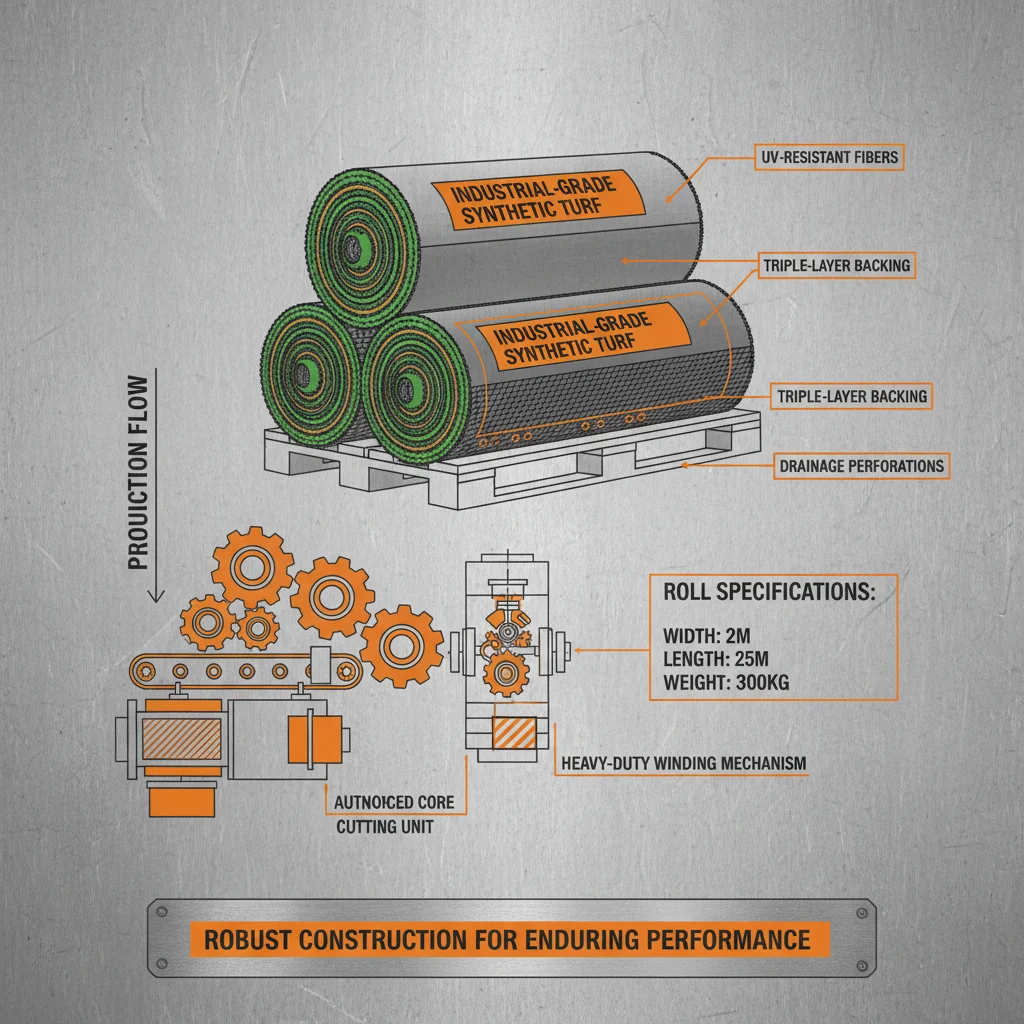
Yes, most manufacturers offer tiered pricing. When purchasing full rolls (e.g., 2m x 25m or 4m x 25m), the logistics and cutting costs are minimized, allowing the supplier to offer a lower cost per m2. This is particularly beneficial for large commercial projects or developers managing multiple properties.
Currently, turf made from recycled materials or those with certified non-toxic components can have a slightly higher cost per m2 due to the specialized processing required. However, as these technologies scale and environmental regulations tighten, the price gap is closing, and the long-term social and environmental value far outweighs the slight price increase.
Conclusion
Navigating the artificial grass cost per m2 requires a holistic approach that balances immediate budgetary constraints with the technical requirements of the intended application. By understanding that factors like stitch rate, UV stabilization, and backing permeability drive the price, buyers can avoid the "cheap trap" and instead invest in products that offer true durability and aesthetic longevity.
Looking forward, the synthesis of recycled materials and automated manufacturing will likely stabilize costs while enhancing the sustainability of synthetic turf. Whether you are designing a professional golf green or a family garden, focusing on the lifecycle value rather than just the initial cost per square meter is the key to a successful, low-maintenance landscape. Visit our website for premium solutions: www.xy-grass.com