Finding high-quality yet cheap turf for sale requires a strategic understanding of the balance between initial procurement costs and long-term durability. In the artificial grass manufacturing sector, "cheap" does not necessarily mean low quality, but rather refers to optimizing material selection and sourcing directly from integrated manufacturers to eliminate intermediary markups.
The primary challenge for buyers is distinguishing between budget-friendly options that offer sustainable value and those that degrade rapidly under UV exposure or heavy foot traffic. Whether for residential gardens, sports facilities, or commercial landscaping, the goal is to minimize the cost per square meter without compromising the safety and aesthetics of the installation.
This guide provides a comprehensive framework for evaluating budget turf options, analyzing the factors that drive pricing in the plastics and rubber industry, and identifying the technical specifications that ensure a low-cost investment remains a high-performance asset.

Understanding the Cost Structure of Artificial Turf

The price of artificial grass is primarily determined by the raw material costs of polymers, the complexity of the weaving process, and the distribution chain. In the rubber and plastics industry, integrated manufacturers who handle extrusion, weaving, and coating under one roof can offer more competitive pricing by reducing logistics overhead and eliminating middleman commissions.
When searching for cheap turf for sale, it is essential to realize that the lowest upfront price often correlates with lower stitch density or a thinner backing. However, by optimizing the yarn composition—such as using a balanced PP and HDPE composite—manufacturers can maintain resilience while keeping costs manageable for large-scale projects.
Key Material Factors Affecting the Price
Material composition is the most significant driver of cost. High-density polyethylene (HDPE) provides superior durability and UV resistance, while polypropylene (PP) is often used to provide structural support and reduce costs. The ratio of these materials, combined with the Dtex (yarn thickness), determines the product's final price point and its ability to withstand abrasion.
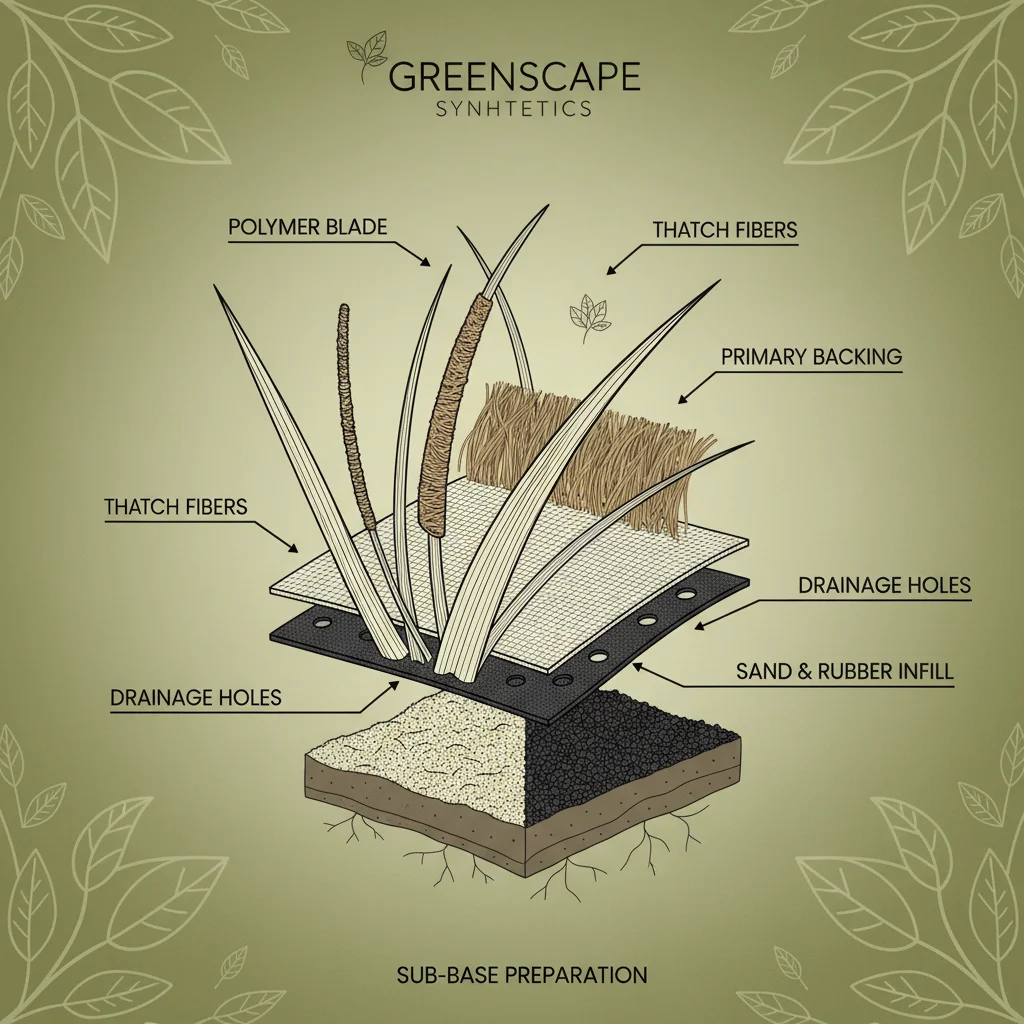
Furthermore, the backing system—typically a high-strength mesh base—impacts both the cost and the stability of the turf. Lower-cost options may use a simpler coating process, whereas professional-grade sports turf, such as the FG50, incorporates specialized filament extrusion and eco-friendly shock-absorbing cushions to meet international standards like those of FIFA, which naturally increases the price relative to basic landscape grass.
Matching Budget Turf to Specific Applications
Not every project requires the highest specification of turf. For low-traffic areas like decorative garden borders or temporary event spaces, a basic artificial landscape grass with a shorter pile height is an ideal way to keep expenses low without sacrificing visual appeal. In these scenarios, a lower stitch rate is acceptable because the surface is not subject to intense athletic stress.
Conversely, for high-impact areas such as football pitches or playgrounds, opting for the absolute cheapest turf for sale can be a costly mistake. These applications require specific technical parameters, such as a drainage rate of 60L/min/m2 and professional-grade tuft lock, to ensure athlete safety and prevent the surface from matting over time.
Evaluating Value Through Life-Cycle Analysis
True value is measured by the total cost of ownership over the product's lifespan. While basic turf has a lower purchase price, professional-grade options often provide a better Return on Investment (ROI) due to reduced maintenance and a significantly longer replacement cycle. The following conceptual index illustrates the relative balance between initial cost and long-term durability across different turf categories.
As shown in the illustrative framework, while basic landscape grass offers the lowest initial expenditure, the durability score is lower. Mid-range and professional options, like the FG50, require a higher initial investment but offer an 8-year warranty and superior resilience, reducing the frequency of costly re-installations.
How to Source Directly from Manufacturers
To secure the most competitive pricing for cheap turf for sale, buyers should move up the supply chain. Sourcing from a company that integrates manufacturing and trading—such as Hebei Xiongyi Rubber & Plastic Products Co., Ltd.—allows for direct factory pricing. This eliminates the markup added by wholesalers and distributors, providing a direct line to the production base.
Direct sourcing also allows buyers to customize specifications. By adjusting the pile height, yarn quantity, or backing material based on actual needs, project managers can remove unnecessary features that drive up the price, effectively creating a "custom budget" solution that meets technical requirements while remaining cost-efficient.
Avoiding Common Budget Procurement Pitfalls
A common error in searching for cheap turf for sale is ignoring UV stabilization. Low-grade turf often lacks high-quality UV stabilizers, leading to rapid color fading and fiber brittleness within the first two years of exposure. Always verify that the product has passed rigorous UV and temperature tests to ensure the "cheap" price doesn't lead to an early replacement.
Another risk is poor drainage. Budget options may have a restrictive backing that traps water, leading to mold growth and surface instability. Ensuring a high permeability base is critical, especially for outdoor installations in rainy climates, to maximize the usable hours of the facility and prevent long-term damage to the sub-base.
Selection Framework for Cost-Effective Turf
Selecting the right turf involves weighing the application's intensity against the available budget. The following table provides a qualitative comparison of different turf types to help buyers decide where to allocate their spending.
| Turf Category | Primary Use Case | Durability Level | Budget Impact |
|---|---|---|---|
| Basic Landscape | Ornamental Gardens | Low to Moderate | Minimal |
| Standard Carpet | Indoor Exhibits | Moderate | Low |
| Playground Turf | Kids' Areas | High (Softness) | Moderate |
| Sports Grade | Training Fields | Very High | Moderate to High |
| FIFA Pro Grade | Professional Stadiums | Maximum | High |
| Custom Composite | Specialized Projects | Variable | Optimized |
Ultimately, the most cost-effective choice is the one that matches the expected wear and tear of the environment. For professional sports, the FG50's HDPE/PP composite structure and FIFA-standard quality provide the lowest long-term cost due to its 8-year durability and minimal maintenance requirements.
Frequently Asked Questions
"Cheap" often refers to the lowest possible price regardless of quality, while "budget-friendly" refers to turf that is priced competitively but still meets essential technical standards for its intended use, such as UV resistance and adequate drainage.
Yes, provided you source directly from a manufacturer. By selecting a professional-grade product like the FG50, which uses HDPE/PP composites and high-strength mesh, you get the best value-to-performance ratio suitable for athletic use.
Generally, yes. Low-density turf may mat faster, requiring more frequent brushing to keep the fibers upright. High-quality composite turf is engineered with anti-matting technology to reduce the maintenance burden.
Proximity to major logistics hubs, such as Tianjin Port or the China-Europe Railway, reduces shipping costs, which can be a significant portion of the total price for large international orders of artificial grass.
Prioritize UV stability, drainage rate, and tuft lock. These three factors determine whether the turf will last for several years or fail within a few months of installation.
Depending on the manufacturer. Professional-grade solutions from established producers like XYGrass often come with a comprehensive 8-year warranty, regardless of the specific product tier.
Conclusion
Securing cheap turf for sale that delivers genuine value requires looking beyond the price tag and analyzing the material science, manufacturing process, and intended application. By sourcing directly from integrated manufacturers and prioritizing specifications like UV resistance and drainage, buyers can significantly reduce their initial costs without sacrificing the longevity of their investment.
Whether you are upgrading a professional stadium or enhancing a residential garden, the right balance of HDPE/PP composites and technical certification ensures a sustainable surface. For more detailed technical specifications and bulk procurement options, visit www.xy-grass.com to evaluate the most competitive artificial grass solutions available.