

Does Artificial Turf Get Hot in the Sun? A Data-Driven Guide for Commercial Buyers Managing surface heat is critical for playgrounds, sports facilities, and public landscapes. Discover the facts about
Managing surface heat is critical for playgrounds, sports facilities, and public landscapes. Discover the facts about artificial grass temperature and XY Grass's engineered cooling solutions for reliable, high-performance installations.
Get Your Free Thermal Sample & QuoteAs a purchasing or operations manager, you evaluate artificial grass for durability, aesthetics, and Return on Investment (ROI). However, unmanaged surface heat can undermine all these benefits, leading to:
Simply asking "does artificial turf get hot?" isn't enough. The key question is: How much hotter does it get, and what solutions exist to manage it?
All materials absorb and retain solar radiation differently. Traditional artificial grass uses polyethylene (PE) or polypropylene (PP) yarn, which can reach high temperatures. Key factors influencing heat include:
Comparative Data: On a 90°F (32°C) sunny day, traditional artificial turf surfaces can reach 140-160°F (60-70°C), while natural grass typically stays close to ambient air temperature. This is the core challenge we engineer to solve.
HEBEI XIONGYI (XY Grass) doesn't just supply turf; we provide heat-mitigation systems. Our R&D focuses on lowering peak temperatures for safer, more comfortable, and durable installations.
Your Next Step: Discuss your project's climate and usage with our engineers for a tailored recommendation. Request a technical consultation now.
| Product Series | Primary Use | Key Technology | Typical Peak Temp Reduction* | Cooling Maintenance Tip |
|---|---|---|---|---|
| XY Landscape Pro | Residential & Commercial Lawns | Cool-Yarn™, Light Green Tones | 10-15% | Brief morning watering |
| XY PlaySafe | Playgrounds & Schools | Cool-Yarn™ + Silica Sand Infill | 20-25% | Minimal; sand retains less heat |
| XY SportCool | Sports Fields | High-Density Cool Fiber + Hybrid Sand Infill | 15-20% | Standard field irrigation system |
| Standard PE Turf (Baseline) | Generic Use | N/A | 0% (Baseline) | Requires frequent watering |
artificial turf temperature does astroturf get hot artificial turf that doesn't get hot
*Reduction compared to standard dark-green PE turf under identical test conditions (90°F ambient, full sun). Results vary by specific climate and installation.
In direct, intense sunlight, some artificial surfaces can be 30-50°F (17-28°C) hotter than air temperature and significantly hotter than natural grass. However, with XY Grass's cooling technologies, this differential can be substantially reduced, making the surface much more manageable.
Absolutely. Our OEM/ODM service allows us to adjust yarn composition, color, pile structure, and recommend specific infill systems for projects in the Middle East, Australia, or southern US states. Tell us your location's max temperatures.
For heat reduction, silica sand or other mineral-based infills are superior to rubber. They absorb less solar radiation and dissipate heat more quickly. We provide detailed infill comparison sheets.

For standard products, lead time is 15-20 days. For custom OEM projects, sample confirmation takes 7-10 days, with production following. Our integrated factory enables high-speed delivery once specs are locked.
Standard terms are 30% T/T deposit, 70% against copy of Bill of Lading. For large/repeat orders, we offer flexible terms. We also support trade assurance through platforms like Alibaba for transaction security.
"School District Playground Project, Arizona, USA:" "We were hesitant due to the heat. XY Grass's PlaySafe samples were noticeably cooler to the touch than others we tested. The installation has been in for 18 months through brutal summers, and the principal reports zero heat-related complaints. The silica sand infill was a game-changer." – Michael R., District Facilities Manager
"Hotel Resort in Dubai, UAE:" "Aesthetics couldn't compromise on guest comfort. XY Grass's custom light-olive turf around the pool area stays comfortable even in the afternoon sun. Their team understood our micro-climate challenge perfectly. The project was completed on time and within budget." – Sarah L., Landscape Architect
"Soccer Training Facility, Texas, USA:" "We needed a field that could withstand constant use without becoming a heat trap. The SportCool series with hybrid infill has performed excellently. Post-watering, it cools down in minutes. The quality is top-tier, and the pricing was 20% better than local distributors quoting similar specs." – Coach David K., Facility Owner

Alex Chen is a Senior Product Engineer at HEBEI XIONGYI RUBBER & PLASTIC PRODUCTS CO., LTD. With over 10 years in polymer science and artificial turf manufacturing, Alex leads the R&D team focused on enhancing product performance for extreme climates, specializing in heat reduction technologies and sustainable materials. He works directly with international clients to translate project requirements into engineered solutions.
Don't let heat concerns compromise your project's success. Partner with a factory that engineers solutions.
Contact XY Grass Now:
📞 Tel/WhatsApp: +86-13931845866
✉️ Email: sales@xiongyigrass.com
🏢 Address: Hope New District, Mengcun County, Cangzhou City, Hebei Province, China
🌐 Contact Page: https://www.xy-grass.com/contactus/
Limited Capacity Alert: Due to high seasonal demand, premium production slots for custom cooling projects are filling fast. Inquire today to secure your timeline.


Hit enter to search or ESC to close


Trusted by Global Projects & Compliant Worldwide
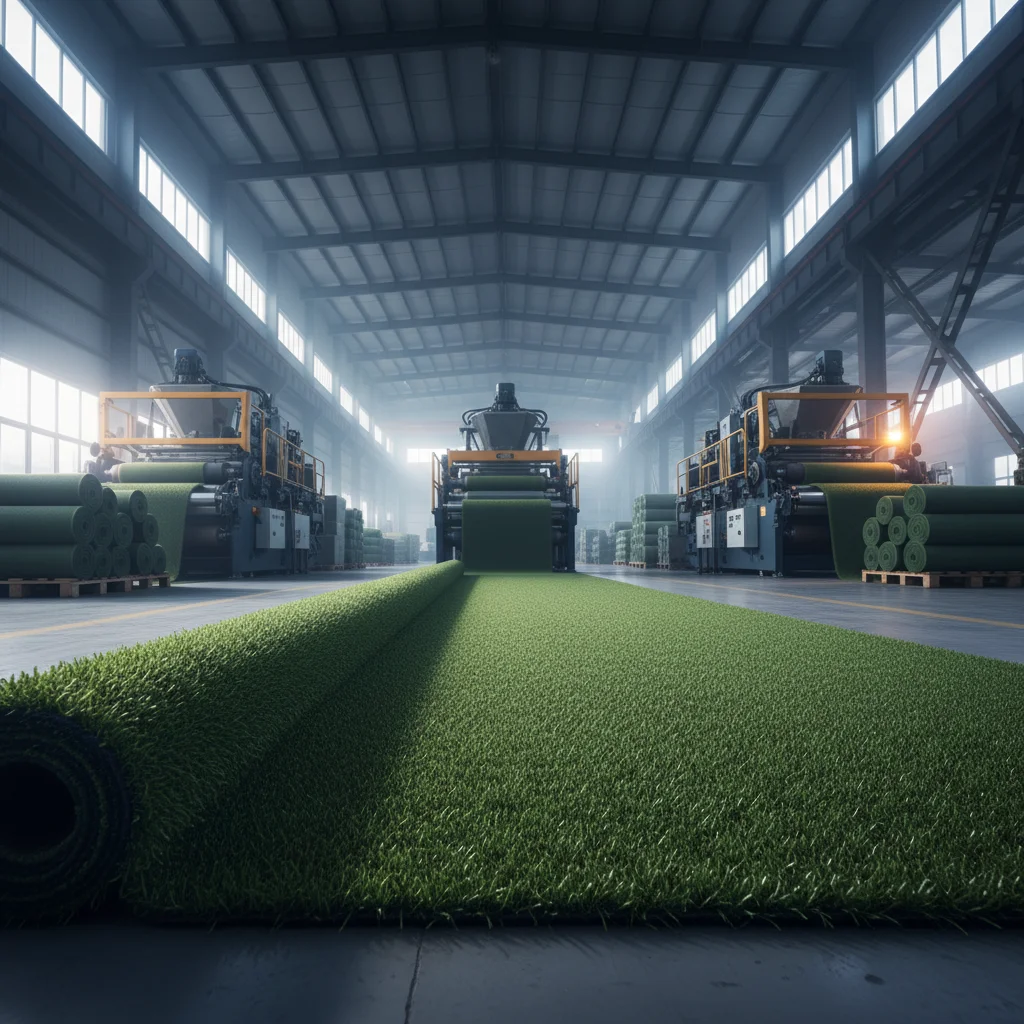
Global Supply Chain Excellence: As a powerful factory based in Hebei, China, we leverage vertical integration and scale to offer superior quality at competitive prices, directly addressing the pain point of high costs from intermediaries.
Our Quality & Safety Certifications:
Our products are tested and certified to meet international standards, ensuring performance and safety you can trust: ISO 9001, SGS, CE, RoHS, ASTM. We provide full documentation for your procurement compliance.