

Addressing Dog Pee Ammonia Smell in Artificial Grass: A Guide for Importers and Brand Owners
For import managers, brand owners, and wholesalers sourcing pet-friendly artificial grass, controlling persistent dog pee ammonia smell is a critical product performance and customer satisfaction issue. This guide details the technical causes of odor retention and presents a manufacturing-focused solution: premium, high-drainage artificial turf systems designed for easy cleaning and long-term odor control. We will explore the specifications, certifications, and supply chain advantages that make certain OEM/ODM suppliers, like those leveraging China's integrated manufacturing ecosystem, a strategic partner for your pet product lines.
Industry Pain Points: Why Standard Turf Fails Against Ammonia Odors
Retailers and brands face consistent returns and negative reviews when artificial grass fails to manage pet waste. The primary issue stems from the chemical breakdown of urea in dog urine into ammonia, a compound with a powerful, pungent smell. Standard, cost-driven turf products often exacerbate the problem through:
- Poor Drainage & Backing Composition: Non-permeable backings or insufficient drainage holes trap moisture and urine, allowing ammonia to concentrate and seep into secondary materials.
- Low-Quality Yarn and Latex: Inferior face yarns (pile) are less hydrophobic and more prone to staining and odor absorption. Weak latex coating on the backing fails to create a proper seal, allowing liquids to penetrate deeper layers.
- Inadequate Infill Compatibility: Without proper guidance, end-users may use inappropriate infills that clump and harbor bacteria, intensifying ammonia smells over time.
For B2B buyers, this translates to product recalls, damaged brand reputation, and lost market share in the lucrative pet-owner segment.
The Technical Solution: Engineered Turf for Odor Management
The solution lies in specifying turf built from the ground up for pet hygiene. It’s a multi-layered engineering challenge, not just a marketing feature.
1. High-Performance Drainage Backing System
The foundation is a multi-layer backing. A primary coated fabric with precision-punched holes is coupled with a secondary, fully permeable geotextile-like layer. This design promotes rapid vertical drainage, moving liquid away from the surface and into the substrate below, where it can dissipate naturally, preventing ammonia buildup.
2. Hydrophobic & Durable Yarn Technology
Using premium polyethylene (PE) or polypropylene (PP) yarns treated for stain and UV resistance is crucial. These materials are inherently more hydrophobic than nylon alternatives, meaning they repel liquids rather than absorb them, making surface rinsing effective. Yarn density (stitch rate) also matters—a denser pile leaves less space for waste to pool on the backing.
3. Antimicrobial Treatment Options (OEM/ODM)
For added value, yarns or the backing can be treated with built-in antimicrobial agents during manufacturing. These treatments inhibit the growth of odor-causing bacteria on the turf surface itself. This is a key customizable feature for brands seeking a competitive edge.
Key Technical Parameters for Sourcing Pet Turf
| Parameter | Specification for Odor Control | Importance for Buyers |
|---|---|---|
| Drainage Rate | >60 liters/min/m² (under 100mm water head) | Ensures quick fluid passage, reducing contact time. |
| Yarn Material | UV-Stabilized PE or PE/PP Blend | Offers durability, colorfastness, and liquid repellency. |
| Pile Height & Density | 30-40mm height, ≥16,000 stitches/m² | Balances pet comfort with cleanability and resilience. |
| Backing Type | Dual-Layer PP + Non-Woven Fabric | Provides structural integrity and maximum permeability. |
| Available Treatments | Antimicrobial, Anti-Static, Cool Feel | Adds marketable features for different segments. |
ammonia dog urine get rid of dog pee smell get rid of the smell of dog urine
Note: Specifications are for reference. Final product parameters may vary based on OEM/ODM requirements. Please refer to the actual order confirmation and technical datasheet.
Why Source from a Specialized Manufacturer like XY Grass?
Addressing complex issues like dog pee ammonia smell requires more than a generic supplier; it demands a manufacturing partner with focused expertise and scalable capacity.
Focused Production & Quality Assurance
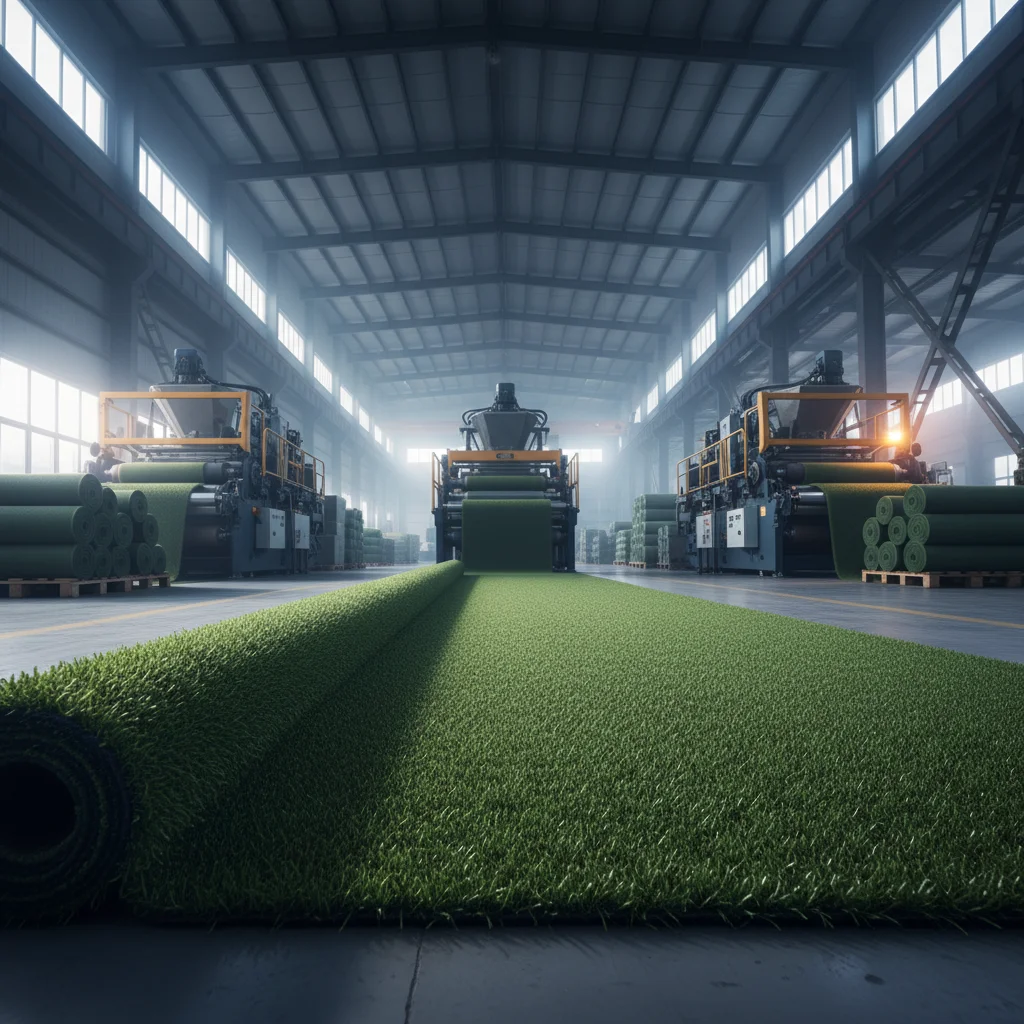
With a facility covering 5,000 m² and dedicated production lines, a factory can control the entire process from yarn extrusion to backing coating. In-line QA checks for drainage hole consistency, latex coating uniformity, and yarn weight ensure every roll meets the precise specifications required for odor management.
Full OEM/ODM & Customization Support
As a brand owner or importer, you need a product that fits your market niche. A capable manufacturer offers:
- Pile Customization: Adjust height, density, color (green blends, brown thatch), and yarn type.
- Backing & Drainage Design: Modify hole patterns and layer materials to meet specific drainage rate targets.
- Treatment Application: Integrate antimicrobial or other functional treatments as per your formula.
- Branding & Packaging: Custom roll sizes, private label packaging, and branded inserts with care instructions.
Compliance & Certifications for Global Markets
Ensuring products meet destination market standards is non-negotiable. Reputable manufacturers hold relevant certifications, which may include:
- ISO 9001: Quality Management Systems assurance.
- CE Certification: Indicates conformity with health, safety, and environmental standards for the European Economic Area.
- Reach/SVHC Compliance: Documentation on chemical substances, critical for EU imports.
- Flamability & Safety Standards: Compliance with relevant national standards for materials.
Disclaimer: Buyers should always request up-to-date certification documents for their specific product order and destination country.
Supply Chain Efficiency: MOQ, Lead Time & Logistics
Transparent commercial terms are vital for planning. A typical specialized supplier might offer:
- MOQ (Minimum Order Quantity): Flexible, often starting from one 20-foot container for standard items. Lower MOQs may be available for new OEM development projects.
- Lead Time: Approximately 15-25 days for standard items after deposit confirmation. Custom OEM projects may require 30-45 days for sample approval and production setup.
- Logistics Support: Experience in handling FOB, CIF, or EXW terms, with professional packing (winded on steel tubes, wrapped in plastic and woven cloth) to prevent shipping damage.

Feedback from Industry Partners
Here is what some of our partners in different regions have shared about their experience with sourcing pet-specific artificial grass:
Michael R., Brand Owner (California, USA): "We switched to a manufacturer with a dedicated pet grass line after complaints about smell. The technical focus on drainage was the key. Our new product line has a <1% return rate for odor issues. Their OEM team perfectly executed our custom green/brown blend and backing specs."
Sarah L., Import Manager for a Home & Garden Chain (UK): "CE documentation and consistent quality were our top priorities. We've ordered over 50 containers of their antimicrobial-treated pet turf. The technical data sheets provided make compliance straightforward. Delivery to Felixstowe has been reliable."
David K., Sourcing Agent (Australia): "My client, a landscaping supplier, needed a turf that could handle both sun and dog urine. The solution wasn't just about yarn but the complete backing system. The factory provided test samples with different drainage rates, allowing us to choose the optimal one for the local climate. Their project management made a complex ODM order manageable."
Next Steps for B2B Buyers
Solving the dog pee ammonia smell challenge in your product offering requires a technically proficient supply partner. The step from a generic to a performance-driven artificial grass product involves clear specification and expert manufacturing.
Actionable Recommendation: When requesting quotes or samples, specify your requirements for drainage rate, desired treatments (e.g., antimicrobial), and target certifications. Provide a brief on your end-market application (residential, commercial dog parks, etc.).
Ready to develop or source a high-performance, odor-resistant artificial grass product? Contact our technical sales team to discuss your specifications, request a product catalog, or initiate a custom sample project. We specialize in transforming performance requirements into manufacturable, high-quality turf solutions.
Contact: XY Grass (HEBEI XIONGYI RUBBER & PLASTIC PRODUCTS CO., LTD.)
Tel: +86-13931845866
Email: sales@xiongyigrass.com
Address: Hope New District, Mengcun County, Cangzhou City, Hebei Province, China
Contact Page: https://www.xy-grass.com/contactus/
FAQ: Sourcing Artificial Grass for Pet Odor Control
What is the most important feature in artificial grass to prevent dog pee ammonia smell?
The most critical feature is a high-performance drainage backing system. Efficient vertical drainage moves liquid away quickly, preventing it from stagnating on the backing where ammonia develops. This is more foundational than any surface treatment.
Can you add antimicrobial treatment to any artificial grass?
Technically, it can be applied during manufacturing, but its efficacy is greatest on quality, hydrophobic yarns with good drainage. On a poorly draining turf, the treatment will be overwhelmed. It is best specified as part of an integrated OEM product design.
What MOQ can we expect for a custom pet turf product?
MOQs are project-dependent. For modifying an existing standard product (e.g., adding a treatment), an MOQ of one 20ft container is common. For a fully custom ODM project involving new yarn, backing, and color, the initial MOQ may be higher (e.g., 2-3 containers) to cover production line setup.
What certifications should I request for the US and EU markets?
For the EU, CE marking and REACH/SVHC compliance documentation are essential. For the USA, while no specific turf certification is mandatory, general product safety standards apply. ISO 9001 certification from the manufacturer indicates a controlled quality process. Always verify the latest import regulations for your country.
How do you test the drainage performance of the turf?
Reputable manufacturers use a standardized test (often based on DIN or similar standards) measuring how many liters of water per minute pass through one square meter of turf under a specified water head (e.g., 100mm). Request this test data (liters/min/m²) when comparing suppliers.

About the Author: Mark Weston is a product development specialist with over 12 years of experience in the technical textiles and synthetic surfaces industry. He has collaborated with manufacturers and global brands across North America and Europe to develop performance-driven artificial grass solutions for residential, commercial, and sports applications. His focus is on translating end-user challenges, like pet odor management, into precise manufacturing specifications and quality control protocols.