

Field Installation: A Comprehensive Guide to Professional Artificial Turf Setup
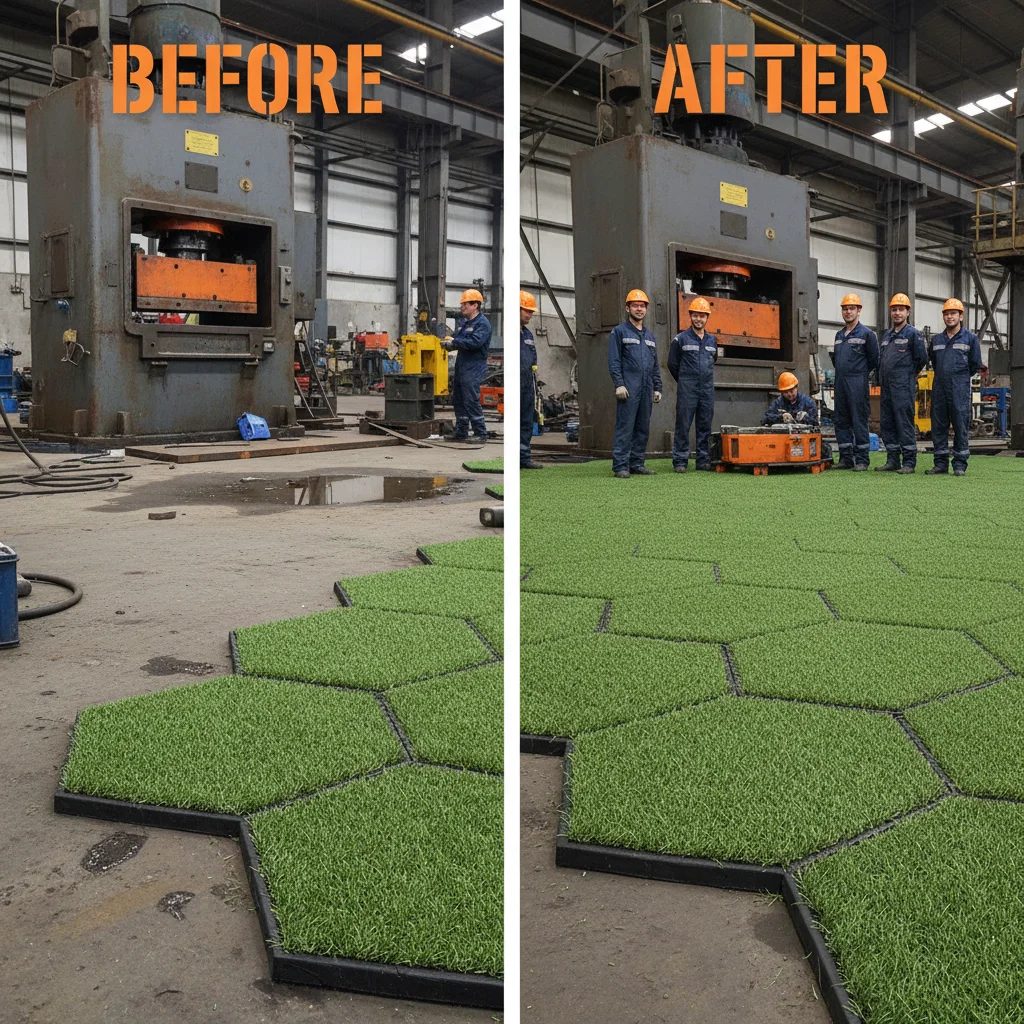
For import managers, brand owners, and sourcing agents, a successful artificial turf project hinges on flawless field installation. Common challenges like uneven seams, poor drainage, and premature wear often stem from improper setup, not the product itself. This guide details the critical installation process and explains how partnering with a manufacturer like HEBEI XIONGYI RUBBER & PLASTIC PRODUCTS CO., LTD. ("XY Grass"), which provides robust technical support and consistent quality, mitigates these risks from the source, ensuring your project's long-term success and client satisfaction.
Why "Field Installation" is the Make-or-Break Phase of Your Turf Project
Procuring high-quality artificial grass is only half the battle. The on-site field installation process determines the final performance, aesthetics, and lifespan of the product. Common industry pain points include:
- Seam Visibility and Failure: Improper seaming techniques lead to visible joins, tripping hazards, and eventual separation.
- Poor Drainage and Water Pooling: Incorrect base preparation and insufficient slope cause flooding, creating unsafe conditions and promoting microbial growth.
- Uneven Surface and Compaction Issues: An unstable sub-base results in lumps, sags, and an inconsistent playing or walking surface.
- Fiber Shedding and Loss of Infill: Inadequate securing and brushing during installation can lead to accelerated product degradation.
- Costly Corrections: Fixing a bad installation often costs more than the initial install, eroding project profitability.
The XY Grass Integrated Solution: Product Engineering Meets Installation Protocol
We address these challenges at the manufacturing level. Our turf is engineered with field installation in mind, featuring precise stitching, consistent backing permeability, and clear pile direction markings. Furthermore, we provide detailed, step-by-step installation manuals, video tutorials, and accessible technical consultation to support your local installers, ensuring the product performs as designed.
Professional Field Installation: A Step-by-Step Overview
Following a standardized procedure is non-negotiable for a durable result. Here is a condensed overview of the critical phases.
Phase 1: Site Preparation & Sub-Base Construction
This is the most crucial step. A properly constructed base accounts for over 70% of the installation's longevity.
- Excavation & Grading: Remove existing turf and soil to a specified depth (typically 3-4 inches). Create a slight grade (1-2%) for drainage away from structures.
- Sub-Base Material: Use a compacted aggregate base (e.g., crushed stone or decomposed granite) to provide stability and permeability.
- Compaction: Mechanically compact the sub-base in layers to achieve a firm, unyielding surface that prevents future settling.
Phase 2: Turf Deployment, Seaming, and Securing
Precision in this phase ensures a seamless appearance and secure fit.
- Unrolling & Acclimation: Allow rolls to relax in the sun for 1-2 hours to remove transit folds. Ensure pile direction is consistent. Seaming: Two primary methods:
- Adhesive Seaming: Apply premium outdoor seam tape and adhesive to the backing, then carefully join and weight the seams. This is our recommended method for most landscape and sports applications.
- Nailing/Stapling: Can be used for temporary installations or in conjunction with adhesive. Requires specific galvanized fasteners placed at correct intervals.
- Perimeter Securing: Secure the turf's edges using 5-6 inch galvanized landscape spikes or nails every 4-6 inches.
Phase 3: Infill Application & Final Grooming
Infill stabilizes the turf, protects the fibers, and influences performance characteristics.
- Infill Spreading: Use a drop spreader to apply silica sand or engineered rubber/sand blends evenly across the surface.
- Brushing: Power brush the turf in multiple directions to work the infill down to the base and upright the grass fibers.
- Final Inspection: Check for loose seams, missed nails, and infill distribution.
DIY vs. Professional Field Installation: Key Considerations
| Factor | DIY Installation | Professional Installation |
|---|---|---|
| Tool & Material Cost | High upfront rental/purchase | Included in service cost |
| Technical Knowledge | Reliant on guides/videos | Years of practical experience |
| Time Investment | Significant (weekends/weeks) | Efficient, crew-based completion |
| Risk of Error | Higher, corrections are costly | Lower, guaranteed workmanship |
| Long-Term Warranty | Typically voided on product | Often includes labor warranty |
sports field installation turf field installation field turf installation
Note: Product warranties from XY Grass remain valid regardless of installer, provided installation follows our published guidelines.
How XY Grass's Manufacturing Excellence Simplifies Your Field Installation
Our core competencies directly translate into a smoother, more reliable installation process for our B2B partners.
1. Powerful Factory & Rigorous Quality Assurance
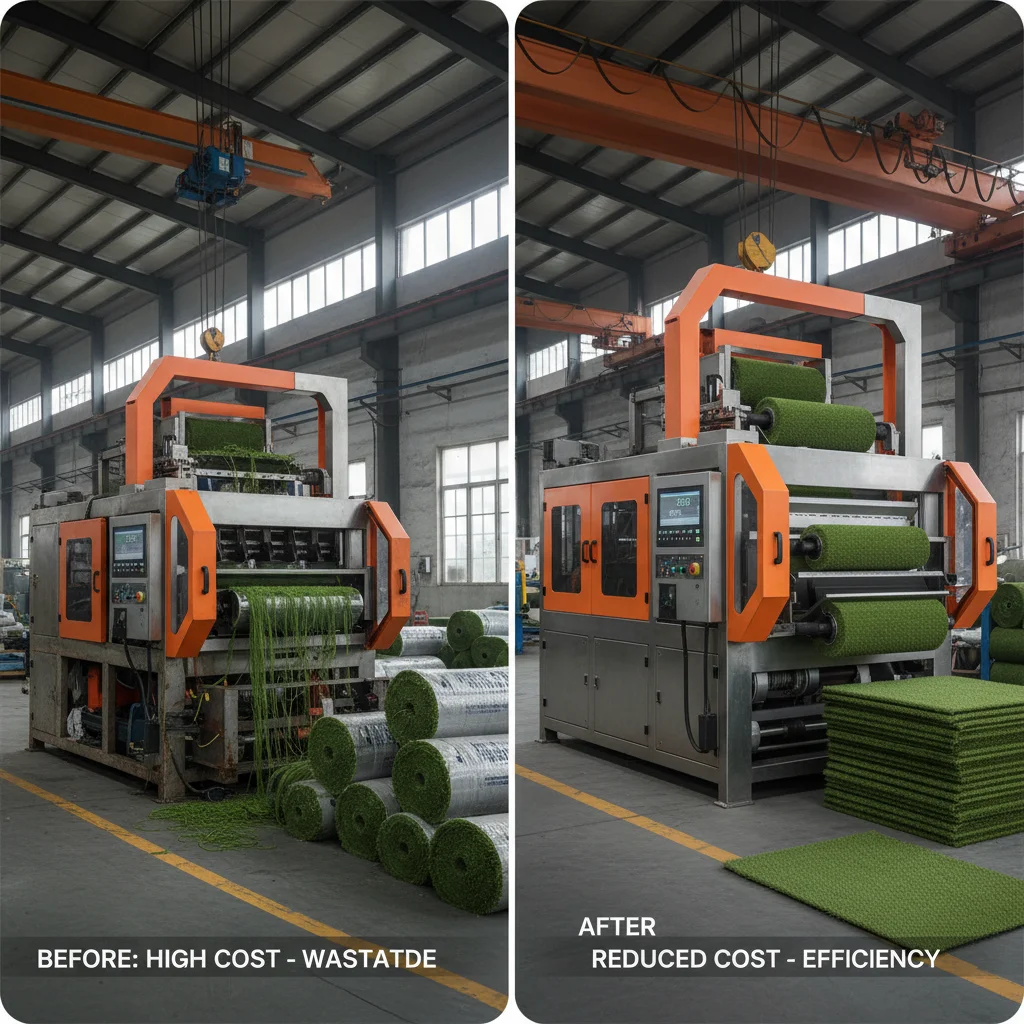
With a facility covering 5,000 m² and established manufacturing processes, we maintain tight control over every production batch. Consistent backing weight, precise tufting, and uniform yarn color mean your installers aren't battling material variations on-site, leading to predictable results and faster completion times.
2. Full OEM/ODM Design & Customization Support
We understand that different projects have different field installation requirements. Whether you need a specific roll width (up to 4 meters standard) to minimize seams for a large sports field, a custom backing permeability rate for a challenging drainage project, or a unique yarn blend and color for a brand-specific landscape line, our technical team can develop a product that aligns with your installation parameters and market needs.
3. High-Speed Delivery Backed by China's Supply Chain
Delays in material arrival disrupt installation schedules and increase holding costs. Leveraging efficient production planning and robust logistics networks, we offer competitive lead times. Typical lead time for standard products is 15-20 days after order confirmation, with expedited options available. We handle export documentation, FOB or CIF terms, and work with reliable freight forwarders to ensure your shipment arrives as planned.
4. Technical Parameters & Compliance for Global Markets
Our products are developed to meet international standards, simplifying your procurement due diligence.
- Common Certifications: Our production is certified under ISO 9001:2015 for quality management. Products can be manufactured to comply with CE standards, RoHS directives, and specific fire ratings (Class 1/Tufted Carpets). (Specific certification applicability depends on product model and destination market; confirm with our sales team.)
- Key Specifications: We provide detailed data sheets including pile height (10mm-60mm), stitch rate, face weight, backing type (PP or SBR latex), and drainage rate. This transparency allows for accurate project planning and installation.

Clear Commercial Terms for Streamlined Sourcing
We facilitate transparent and efficient B2B transactions.
- Minimum Order Quantity (MOQ): Typically 200 square meters per order/color. We are flexible and can discuss solutions for sample or trial orders.
- Sample Policy: Small cutting samples are available free of charge; full roll samples for testing are available at cost.
- Packaging: Standard export packaging includes strong plastic wrap on rolls, fixed on wooden pallets to prevent damage during ocean freight.
- Payment Terms: Common terms include 30% deposit via T/T, balance before shipment, or L/C at sight.
- After-Sales Support: We provide technical data, installation guidance, and responsive communication to address any pre- or post-installation queries.
Disclaimer: All specifications, lead times, and commercial terms are subject to final confirmation on the official proforma invoice and sales contract. Please consult with our team for your specific project requirements.
Feedback from Our Global Partners
Michael R., Project Manager - Landscaping Firm, Florida, USA: "We've been importing from XY Grass for three years. The consistency is what stands out. Roll to roll, the color and backing are identical, which makes seaming during field installation incredibly straightforward. Their technical drawings for custom putting green turf were also spot-on."
"Southwest Sports Inc.", Wholesaler, Texas, USA: "As a wholesaler supplying to installers, we need reliability. XY Grass's clear labeling (pile direction on backing) and comprehensive installation manuals reduce support calls from our clients. Their ODM service helped us create a turf line optimized for our region's specific drainage needs."
David L., Sourcing Agent for European Retail Chains: "Managing logistics for multiple container loads is complex. XY Grass's communication on shipment status and their professional packaging have resulted in zero damage claims over the last 18 months. This reliability in the supply chain is as critical as the product quality itself."
Frequently Asked Questions on Artificial Turf Field Installation
Q: Do you provide on-site installation services?
A: As a manufacturer and exporter based in China, we do not provide direct on-site installation services internationally. However, we are experts in product-specific installation protocols. We supply exhaustive written and video guidance, and our technical team is available to consult with your local installation crew remotely to resolve any product-related questions.
Q: What is the recommended infill for landscape vs. sports applications?
A: For general landscaping, silica sand is often sufficient. For sports fields or high-traffic areas, a mix of silica sand and rounded rubber granules is recommended for better shock absorption and fiber support. The exact infill type and amount (typically 1-2 kg/m² per cm of pile height) depend on the specific turf product and intended use; we provide detailed recommendations per product line.
Q: Can your turf be installed over an existing concrete or asphalt surface?
A: Yes, but with critical modifications. A proper drainage layer (like a perforated sub-base or a shock pad with drainage channels) must be installed on top of the hard surface before laying the turf. Failure to address drainage will lead to water pooling and a shortened turf lifespan. We can advise on suitable system builds for hard-surface installations.
Q: How do you handle custom color matching for ODM projects?
A: The process begins with you providing a physical sample (e.g., a fabric swatch) or Pantone code. Our lab will then spin a custom yarn dye lot and produce a production sample (usually a 1m x 1m piece) for your approval before mass production begins. A custom dye fee and a higher MOQ typically apply.

About the Author: Alex Johnson is a Senior Project Manager with over a decade of experience in the commercial synthetic turf industry. He has overseen the specification and installation of artificial grass systems for municipal, sports, and large-scale residential projects across North America. His focus is on translating manufacturing specifications into practical, durable field installation outcomes.
Ready to Source Turf Designed for Hassle-Free Installation?
Partner with a manufacturer that understands the critical link between factory quality and field performance. Contact XY Grass today for detailed product catalogs, technical specifications, and a quotation tailored to your next project's volume and customization needs.
HEBEI XIONGYI RUBBER & PLASTIC PRODUCTS CO., LTD. (XY Grass)
Tel: +86-13931845866 | Email: sales@xiongyigrass.com
Add: Hope New District, Mengcun County, Cangzhou City, Hebei Province, China
Visit Our Contact Page