

The Complete Maintenance Checklist for Artificial Turf Fields (2024 Guide)
A systematic maintenance checklist for artificial turf fields is essential for facility managers and owners to protect their investment, ensure player safety, and maximize field longevity. This guide provides a data-driven, step-by-step framework for routine and deep cleaning, backed by insights from a leading manufacturer's experience in supplying durable, low-maintenance sports surfaces to venues worldwide.
The High Cost of Neglect: Common Artificial Turf Field Failures
For import managers, brand owners, and wholesalers sourcing turf, understanding downstream maintenance pain points is critical for product selection. Poorly maintained fields lead to:
- Premature Fiber Degradation: UV exposure and infill compaction without grooming can reduce lifespan by up to 30-40%.
- Increased Injury Risk: Hardened infill, inconsistent surface levels, and poor drainage correlate with higher rates of abrasions and lower-limb injuries.
- Voided Warranties: Most manufacturer warranties require documented adherence to a maintenance protocol.
- Drainage System Failure: Clogging from debris and organic growth, leading to water pooling and event cancellations.
These issues directly impact your client's total cost of ownership (TCO) and can damage your brand's reputation as a supplier.
The Proactive Solution: A Manufacturer-Backed Maintenance Protocol
The optimal maintenance strategy is preventive, not reactive. It combines daily, weekly, monthly, and annual tasks. As a factory deeply integrated into the supply chain, we design our XY Grass sports systems with maintenance efficiency in mind—from high-quality, resilient yarns that resist matting to optimized backing for faster drainage.
Your Core Artificial Turf Field Maintenance Checklist
This checklist serves as a universal baseline. Always consult the specific guidelines provided by your turf manufacturer.
Frequency-Based Maintenance Tasks Overview
| Frequency | Key Tasks | Equipment/Tools Needed | Performance Goal |
|---|---|---|---|
| Daily / Post-Event | Remove surface debris (leaves, trash), inspect for visible damage/vandalism. | Leaf blower, plastic rake, inspection log. | Debris-free surface, early issue identification. |
| Weekly | Power brush/groom to lift fibers, check for minor infill displacement. | Rotary power brush (set to correct height). | Prevent fiber matting, maintain consistent pile height. |
| Monthly | Deep groom against grain, spot clean stains, verify drainage function. | Deep-pile groomer, mild detergent, hose. | Restore infill distribution, address localized issues. |
| Annually / Bi-Annually | Top-up infill material, disinfect for bacteria, complete shock pad inspection (if applicable). | Infill spreader, approved sanitizer, professional inspection service. | Maintain critical shock absorption, ensure hygienic surface. |
Note: Task frequency should increase with field usage intensity. Data is for guidance; please refer to your facility's specific operational manual.
Reducing Maintenance Burden at the Source: The XY Grass Supply Advantage
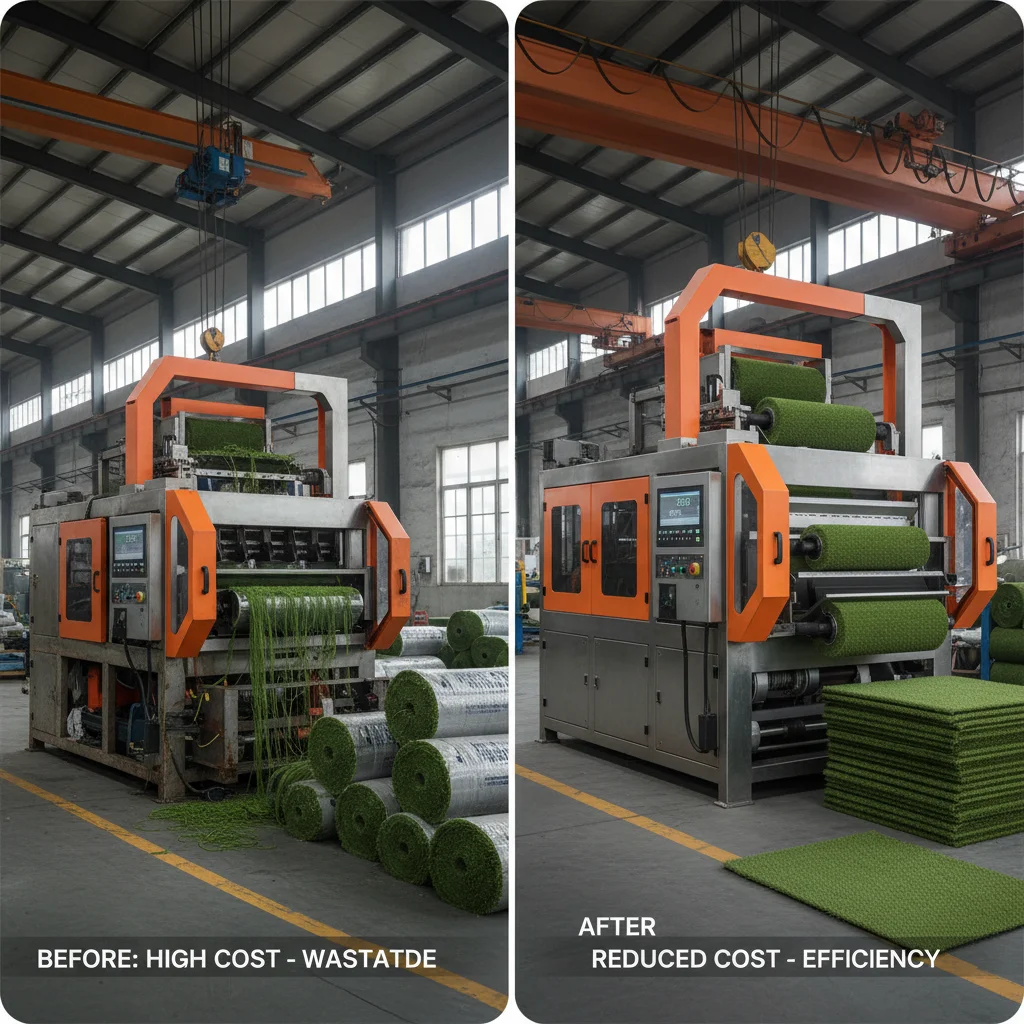
The easiest maintenance problems to solve are those designed out during manufacturing. When you source from a integrated factory like ours, you procure turf built for durability and easier upkeep.
artificial turf field maintenance turf field maintenance field turf maintenance
Technical & Compliance Specifications for B2B Buyers
- Material Science: We use UV-stabilized, high-density polyethylene (HDPE) and polypropylene (PP) yarns with anti-abrasion coatings to slow wear from grooming equipment.
- Backing System: Multi-layer, permeable backing with advanced latex or PU coating ensures dimensional stability and rapid drainage (>30 inches/hour), preventing waterlogging.
- Quality Assurance & Certifications: Our production follows ISO 9001:2015 quality management systems. Products can be manufactured to meet key international safety and performance standards relevant to sports fields.
- OEM/ODM Design Support: We collaborate on fiber shape (diamond, rectangular, C/W), pile height, and density to match your market's specific maintenance climate and usage profile.
- Supply Chain Efficiency: Located in Hebei, with 5,000 m² of dedicated production space, we control the process from raw material to finished roll. This enables high-speed delivery and reliable scheduling for wholesalers and project-based buyers.
Clear Commercial Terms for Sourcing Professionals
- Standard MOQ: 1x 40-foot container (approx. 500-700 sqm, depending on product). Trial orders negotiable for established buyers.
- Lead Time: 15-25 days for standard products; 30-40 days for fully customized ODM projects.
- Customization: Full OEM/ODM available - color, pile height, density, tuft distance, backing, and packaging.
- Packaging: Wrapped on sturdy cardboard cores, covered in plastic, and shipped in standard container sizes for optimal logistics cost.
- Payment & Shipping: Common terms: T/T, L/C. Standard Incoterms: FOB Tianjin/Xingang, CIF main destination ports.
Feedback from Global Facility Managers & Distributors
“James K., Facility Director (Florida, USA):” “We’ve installed XY Grass on three municipal soccer fields. Two years in, the fiber shows minimal fading, and the drainage has held up through heavy rains. Their spec sheet gave us a perfect maintenance starting point.”
“Sourcing Agent for European Sports Retailer:” “The ODM process for our branded line was smooth. Their R&D team adjusted the yarn formula slightly for better performance in colder climates. Logistics were on time, which is critical for our seasonal inventory.”
“Landscape Wholesaler (Australia):” “We needed a turf that could handle high UV and still be easy for our commercial clients to maintain. The product has performed, and the technical documentation provided (including maintenance guides) adds value for our end-users.”

Source Turf Designed for Lower Lifetime Cost
Your choice of manufacturer directly impacts your client's long-term maintenance costs and satisfaction. Partner with a factory that builds durability and ease-of-maintenance into every roll.
Request Your Complimentary Specification & Maintenance Guide Pack: Contact XY Grass today for detailed technical data sheets, compliance information, and a customizable maintenance checklist template for your clients.
Contact: David Chen (Senior Project Manager)
Tel: +86-13931845866
Email: sales@xiongyigrass.com
Website: https://www.xy-grass.com/contactus/
Address: Hope New District, Mengcun County, Cangzhou City, Hebei Province, China.

About the Author: Michael Thornton is a former sports facility operations manager with over 15 years of experience specifying and maintaining synthetic surfaces across North America. He now consults for manufacturers and large purchasers on product development and lifecycle management, focusing on optimizing performance and reducing total cost of ownership.
FAQ: Artificial Turf Field Maintenance for Buyers & Specifiers
Q1: What is the single most important maintenance task for artificial turf longevity?
A: Regular and correct grooming/brushing. This prevents infill compaction and fiber matting, which are primary causes of reduced shock absorption and accelerated surface wear.
Q2: How do I know if my field needs more infill?
A: Conduct a regular “infill depth test” using a simple probe or gauge. Measure at multiple points. If the depth falls more than 2-3mm below the manufacturer's recommended level (often 25-40mm for sports fields), topping up is required.
Q3: Can I use standard landscaping chemicals on artificial turf?
A: No. Always use cleaners and sanitizers approved by your turf manufacturer. Harsh chemicals can degrade yarn fibers or the backing system, voiding warranties. We provide a list of compatible cleaning agents with our product documentation.
Q4: What certifications should I look for when sourcing turf for high-use sports fields?
A: Prioritize suppliers with ISO 9001 for quality management. The turf itself should have test reports from independent labs verifying critical factors like shock absorption (EN 14808), vertical deformation (EN 14809), and skin friction/abrasion. Specific sport federation approvals (e.g., FIFA Quality, World Rugby) may be required for elite venues.
Q5: What is a realistic lifespan for a well-maintained artificial turf field?
A: With a strict adherence to a maintenance checklist, a quality artificial turf sports field can have a service life of 8-12 years, depending on usage hours, climate, and the quality of the initial installation and product. Proactive maintenance is the key variable.