

Turf Baseball Field Design: A Professional Guide for Lasting Performance & Value
turf baseball field installation artificial turf baseball field installation field turf baseball field
Meta Title: Turf Baseball Field Design Guide | OEM & Durable Solutions | XY Grass
Meta Description: Explore expert turf baseball field design for durability, player safety, and low maintenance. Learn about quality materials, OEM/ODM support, and efficient supply chain logistics for bulk buyers.
For import managers, brand owners, and sourcing agents, the core question in turf baseball field design isn't just about aesthetics—it's about specifying a high-performance, cost-effective asset that withstands years of play with minimal downtime. A successful design balances critical factors: player safety through consistent impact attenuation, long-term durability against wear and weather, and a professional appearance that meets league standards. This guide details how a strategic partnership with a technically proficient manufacturer like XY Grass (HEBEI XIONGYI RUBBER & PLASTIC PRODUCTS CO., LTD.) can address these universal procurement challenges.
Common Industry Pain Points in Baseball Turf Procurement
B2B buyers often face predictable yet costly hurdles when sourcing artificial turf systems:
- Inconsistent Quality & Rapid Degradation: Subpar yarn and backing materials lead to premature fading, fiber wear, and seam failure, resulting in frequent, expensive replacements.
- Unreliable G-Max/Safety Ratings: Inconsistent shock absorption across the field increases player injury risk and can lead to non-compliance with league or institutional safety standards.
- Hidden Costs & Logistics Delays: Unclear total landed costs, unpredictable lead times, and poor packaging damage products in transit, derailing project schedules.
- Limited Customization & Support: Suppliers offering rigid, off-the-shelf products fail to accommodate specific branding, local climate conditions, or unique field dimensions.
Strategic Solutions: A Systems Approach to Field Design
Addressing these pain points requires viewing the field as an integrated system, not just a surface.
1. The Performance Layer: Yarn Technology & Pile Specification
The turf fiber dictates playability and longevity. Key specifications include:
| Component | Options & Considerations | Typical Use Case |
|---|---|---|
| Yarn Material | PE (Polyethylene) / PP (Polypropylene) blends. High-quality, UV-stabilized PE offers superior resilience and weather resistance for high-traffic areas like base paths and batter's boxes. | Primary playing surface |
| Pile Height & Density | Design varies by position: Infield turf is typically shorter (e.g., 1.0"-1.5") for true ball roll, while outfield may be longer (e.g., 1.5"-2.0") for cushioning. Density (stitch rate) must be calibrated to support infill and maintain fiber uprightness. | Infield vs. Outfield design |
| Face Weight | A critical durability metric (oz/yd²). Heavier face weights generally indicate more material and longer lifespan. Specifications must align with expected usage (e.g., recreational vs. professional). | Long-term durability planning |
2. The Safety Foundation: Shock Pad & Infill Systems
Player protection is non-negotiable. A layered approach ensures compliance.
- Shock Pad: An elastic layer installed beneath the turf carpet. It is crucial for achieving and maintaining a safe G-Max rating (e.g., below 200 as per ASTM F355 for critical fall height). Options include rubber, foam, or composite pads with varying thicknesses and densities.
- Infill Composition: Typically a mix of silica sand and cryogenic rubber (SBR or TPE). The ratio and quality determine surface stability, cushioning, and fiber support. TPE (Thermoplastic Elastomer) is a premium, cooler, and more environmentally friendly option.
Why Partner with XY Grass for Your Turf Baseball Field Project?
Our focus is on providing reliable, specification-driven solutions for commercial and institutional buyers.
Core Manufacturing & Supply Chain Advantages
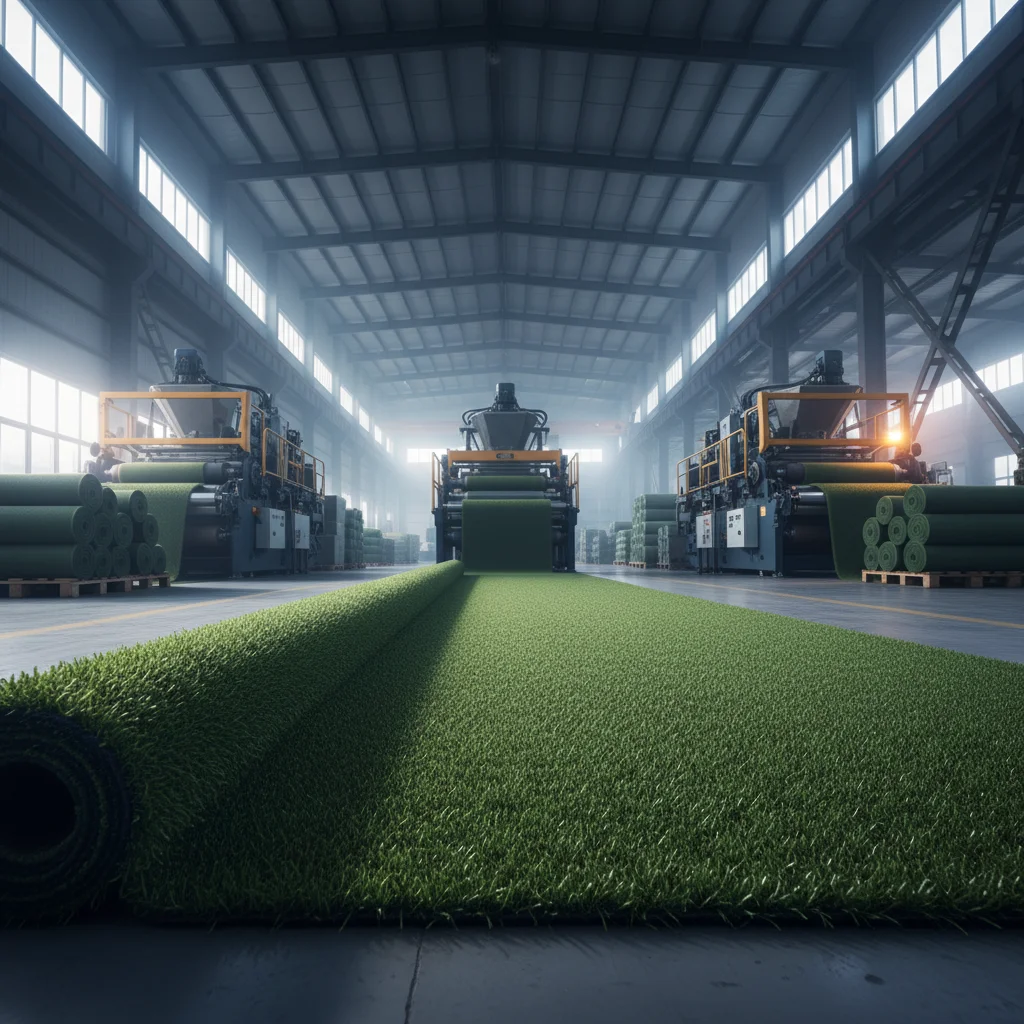
- Vertical Manufacturing Control: Operating from our 5,000 m² facility, we manage extrusion, tufting, coating, and testing in-house. This ensures consistent quality assurance and reduces reliance on external suppliers.
- OEM/ODM Design Flexibility: We collaborate to produce turf that meets your exact specifications—custom pile heights, face weights, color blends (e.g., clay-brown infield, green outfield), and even proprietary yarn formulations. Logo integration into the turf is also available.
- Agile Production & Logistics: Leveraging China's integrated supply chain, we optimize raw material sourcing and production scheduling for high-speed delivery. Standard lead times are competitive, with expedited options for urgent projects.
- Compliance-Focused Production: Our processes are geared toward meeting international standards relevant to sports surfaces and materials. We provide supporting documentation for buyer due diligence.
Transparent Business Terms for B2B Buyers
We structure agreements to provide clarity and reduce procurement risk.
- MOQ (Minimum Order Quantity): Flexible, based on project scale. Typically, one 40HQ container load (approx. 500-700 sqm, depending on specifications) is a practical starting point for bulk pricing.
- Lead Time: Generally 15-25 days for standard designs after confirmed order and deposit. Custom ODM projects may require additional time for sampling and setup.
- Packaging & Logistics: Turf is rolled on cores and wrapped in waterproof plastic, then loaded securely into containers. We handle FOB/CIF terms from major Chinese ports and can coordinate with your preferred freight forwarder.
- Quality Guarantee & After-Sales: We provide product warranties against manufacturing defects. Technical support includes guidance on installation best practices and maintenance schedules to ensure field longevity.
Note: All specifications, MOQ, lead times, and pricing are for reference. Final terms will be confirmed in the proforma invoice based on the specific project requirements.
Trust & Verification: What Our Partners Say
We believe our work is best evidenced by the projects we've supplied. Here is feedback from our international clients:
"We sourced a custom collegiate-level baseball field system from XY Grass. The technical communication on yarn specs and shock pad integration was precise. The turf has maintained its color and playability through two intense seasons, which is a testament to the material quality." – Mike R., Procurement Director, Sports Facility Developer, USA

"As a wholesaler supplying to landscaping and sports contractors, consistency is key. XY Grass's product batches are uniform, and their documentation (test reports, origin certificates) is always in order. It makes the import and compliance process smoother for our end clients." – Sarah L., Brand Owner, Athletic Surfaces Wholesaler, Australia
"Their ODM capability allowed us to create a unique branded turf line for municipal parks. The project involved specific color matching and a shorter pile height for multi-sport use. They delivered samples quickly and the bulk production matched exactly." – David K., Import Manager, European Sports Goods Distributor
Next Steps: From Specification to Quotation
Transforming your turf baseball field design from concept to reality starts with detailed communication.
To provide you with a precise quotation and project plan, please be ready to share:
- Total project area and a basic layout diagram (infield/outfield dimensions).
- Intended use level (e.g., recreational, high school, professional).
- Key performance requirements (e.g., target G-Max rating, preferred infill type).
- Any custom color or branding needs.
- Target installation timeline and destination port.
Our team is ready to provide technical data sheets, material samples, and a comprehensive quote tailored to your procurement schedule.
Ready to Specify Your Field? Contact our project specialists for a detailed consultation.
📞 Tel/WhatsApp: +86-13931845866
📧 Email: sales@xiongyigrass.com
🌐 Contact Page: https://www.xy-grass.com/contactus/
Address: Hope New District, Mengcun County, Cangzhou City, Hebei Province, China
Suggested Image Alt Text for This Page
- professional-turf-baseball-field-design-layout.jpg
- baseball-infield-outfield-artificial-grass-pile-comparison.jpg
- shock-pad-installation-under-baseball-turf-system.jpg
- custom-color-blend-artificial-turf-for-baseball.jpg
- factory-production-tufting-machine-sports-turf.jpg
Frequently Asked Questions (FAQ) on Turf Baseball Field Design
What is the typical lifespan of a quality artificial turf baseball field?
With proper installation and maintenance, a professionally specified turf baseball field using materials like UV-stabilized polyethylene yarn and a robust backing system can have a lifespan of 8-12 years for recreational use. High-traffic areas may require more frequent maintenance or spot replacement. Lifespan is highly dependent on yarn quality, infill management, and annual usage hours.
What certifications should I look for when sourcing turf?
Key indicators include ISO 9001 for quality management systems. For material safety, inquire about compliance with REACH (EU) or Proposition 65 (California). For the finished system, performance test reports against standards like ASTM F355 (Shock Absorption) and ASTM F1015 (Artificial Turf) are crucial. Manufacturers should provide these test reports upon request.
Can you mix different turf specifications on one field?
Yes, this is a common and recommended practice in turf baseball field design. The infield (skin) and base paths often use a shorter, denser pile for faster gameplay and truer ball roll, while the outfield uses a longer pile for cushioning and aesthetic depth. A proficient manufacturer like XY Grass can produce these different specifications seamlessly and ensure they integrate perfectly during installation.
How do you handle drainage in the turf system?
A perforated backing on the turf carpet allows water to pass through. The critical component is the stone aggregate base (typically 3-4 inches of compacted gravel) beneath the turf and shock pad, which provides the primary drainage function. The entire system, when installed correctly on a properly graded sub-base, can handle rainfall rates exceeding 20 inches per hour, allowing games to resume quickly after rain.

About the Author: Alex Johnson is a senior project consultant with over a decade of experience in specification and procurement of synthetic sports surfaces for international clients. His expertise lies in translating complex performance requirements into actionable manufacturing specifications, ensuring projects meet both budgetary and technical goals. He works closely with the engineering team at XY Grass.