

Turf Field vs Grass Field: A Procurement-Focused Analysis for Sports & Landscaping Professionals
Meta Title: Turf vs Natural Grass: Data-Driven Guide for Importers & Buyers | XY Grass
Meta Description: Analyzing turf field vs grass field for cost, performance & maintenance. A buyer's guide for importers, wholesalers & brands sourcing high-quality artificial grass from a reliable factory.
For import managers, brand owners, and sourcing agents evaluating surface solutions, the core question isn't merely "turf field vs grass field?" but rather, "Which option delivers the optimal balance of lifetime cost, consistent performance, and logistical reliability for my project or market?" This guide moves beyond basic comparisons to provide a data-driven framework for procurement decisions, focusing on the technical and commercial specifications that matter in B2B transactions. We'll analyze natural grass against modern artificial turf systems across total cost of ownership, performance metrics, and supply chain considerations, equipping you to make an informed sourcing choice.
Understanding the Core Procurement Dilemma: Initial Cost vs. Long-Term Investment
The choice between surfaces often begins with budget. A simplistic view favors natural grass for its lower initial installation cost. However, a professional procurement analysis requires examining the Total Cost of Ownership (TCO) over a 5-10 year period, where operational expenditures become critical.
Natural Grass: The Hidden Costs of Maintenance
While seeding or sodding is relatively inexpensive, maintaining a professional-grade natural grass field involves significant, recurring investment:
- Labor & Equipment: Regular mowing, aerating, fertilizing, pest control, and line marking require dedicated staff and specialized machinery.
- Water & Utilities: Irrigation is non-negotiable for field health, leading to substantial water bills, a key concern in drought-prone regions.
- Downtime & Revenue Loss: Grass requires recovery time after heavy use and is unusable after heavy rain or during frost, limiting booking capacity and potential revenue for sports facilities.
- Renovation Costs: High-traffic areas (like goalmouths) require frequent reseeding or resodding.
Artificial Turf: Higher Capex, Predictable Opex
An artificial turf system demands a higher initial capital expenditure (CapEx) for base preparation, drainage, infill, and the turf carpet itself. The financial argument is built on predictable, lower operational costs:
- Minimal Maintenance: Routine care involves brushing, occasional rinsing, and infill top-up, eliminating needs for mowers, fertilizers, and extensive irrigation.
- Maximized Utilization: Turf fields can be used 24/7 in almost all weather conditions, dramatically increasing playable hours and facility ROI.
- Longevity: A quality turf system typically offers an 8-12 year warranty, with a predictable lifespan before replacement.
Procurement Insight: For buyers, the decision hinges on the client's operational model. Facilities with high daily usage rates and limited maintenance budgets find the TCO of turf favorable. Projects with ample land, low usage intensity, and a preference for natural aesthetics may prioritize grass.
Performance & Safety: A Technical Specification Comparison
Beyond cost, performance consistency and player safety are paramount. Here’s a comparative view aligned with common buyer inquiries.
| Feature | High-Quality Natural Grass | Modern Performance Artificial Turf | Procurement Consideration |
|---|---|---|---|
| Surface Consistency | Variable. Affected by weather, wear patterns, soil health. | Highly consistent. Uniform ball roll and footing across entire field. | Turf ensures predictable play, crucial for professional training and multi-use facilities. |
| All-Weather Playability | Poor. Becomes muddy, slippery, and easily damaged in rain. | Excellent. Proper drainage allows play minutes after heavy rain. | Turf maximizes scheduling reliability and annual revenue potential. |
| Player Safety (Impact) | Natural cushioning when well-maintained. Risk increases as surface hardens or develops divots. | Engineered shock pads and rubber/sand infill systems are designed to meet critical fall height (CFH) standards like ASTM F355. | Demand test reports (G-max values) from suppliers. Quality turf with a proper pad system provides consistent, certified safety. |
| Heat Retention | Natural cooling through evapotranspiration. | Can be warmer on hot, sunny days. Mitigated by special cool-feel yarns and hydrochill infill technologies. | Specify heat-reduction technologies for projects in hot climates. Request sample temperature data from manufacturers. |
The Sourcing Agent's Guide to Specifying Artificial Turf
If artificial turf aligns with your project's TCO and performance goals, here are the critical technical and commercial parameters to specify with your supplier.
1. Core Technical Specifications
- Yarn Type & Denier: Polyethylene (PE) for softness and resilience; Polypropylene (PP) for durability; Nylon for high resilience. Higher denier indicates thicker, more durable fibers.
- Pile Height & Density: Heavier traffic requires shorter pile (30-55mm) and higher density (e.g., 16,800 stitches/m²+). Landscaping uses taller, less dense piles.
- Backing System: Dual-layer (primary + secondary) latex or polyurethane backing for dimensional stability and tuft bind strength.
- Infill Type: SBR rubber, EPDM, TPE, or organic cork. Discuss performance, environmental, and budget needs.
2. Compliance & Certification Mandates
Ensure your supplier provides valid documentation for:
- Quality Management: ISO 9001 certification for consistent manufacturing processes.
- Material Safety: RoHS, REACH compliance for heavy metals and restricted substances.
- Sports Performance: FIFA Quality Pro/Football, World Rugby, or FIH certifications for specific sports (as required).
- Fire Resistance: Relevant local standards (e.g., NFPA 701, ASTM E84).
- Lead Content: CPSC compliance for consumer safety in the USA.
Disclaimer: Certifications vary by product line and destination market. Exact compliance documents should be confirmed per order specification.
Why Global Buyers Source from XY Grass (HEBEI XIONGYI)
In a market saturated with traders, partnering with a vertically integrated manufacturer like XY Grass provides supply chain security and quality control critical for B2B success.
Integrated Manufacturing & Quality Assurance
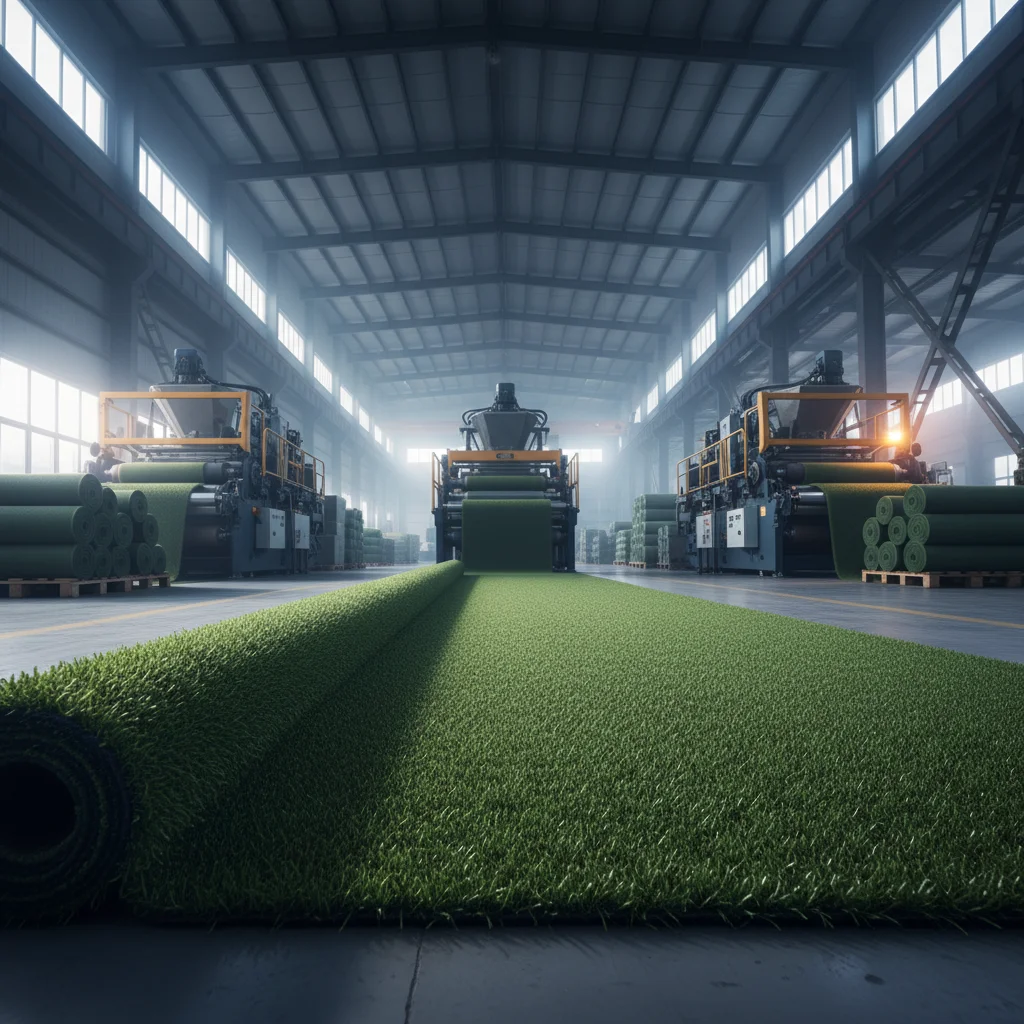
With a 5,000 m² production facility housing tufting, backing, and printing lines, we control the process from raw polymer to finished roll. This allows for strict quality checks at each stage—yarn extrusion, tufting density, latex coating adhesion, and final inspection—ensuring every shipment meets the agreed specification.
turf versus grass turf vs grass backyard turf field
OEM/ODM Design & Technical Collaboration
We operate as a solutions partner, not just a vendor. Our technical team collaborates on:
- Custom Yarn Development: Matching specific colors, UV stabilizer packages, and texture requirements.
- Backing & Infill Specifications: Tailoring the system for your climate and performance needs.
- Logos & Patterns: In-house printing capability for custom inlays, logos, and field markings.

Supply Chain Efficiency & Transparent Terms
Leveraging China's integrated supply chain, we offer clear commercial terms:
- MOQ: Typically 1x20ft container for standard products. Lower MOQ may be available for sample or premium product orders.
- Lead Time: 15-25 days for standard items; 30-45 days for custom OEM/ODM projects, subject to order confirmation.
- Customization: Full support for custom pile height, density, color, and packaging (roll size, labels).
- Logistics: Experienced in FOB, CIF, or EXW terms, with professional export packaging (strong plastic wrap on wooden pallets) to prevent transit damage.
- After-Sales: Comprehensive documentation (test reports, guides) and responsive technical support.
What Our Partners Say: Feedback from the Field
Michael T., Sports Facility Developer (Florida, USA): "We needed a turf system that could withstand intense sun and daily use for a community soccer complex. XY Grass provided samples with different UV stabilizer levels for our testing. The final product has performed evenly across all eight fields for over three years, with minimal heat complaints thanks to their cool yarn recommendation."
Sophie L., Import Manager for Landscaping Wholesaler (UK): "Consistency is key for our business. We've been importing XY Grass's landscaping range for 5 years. The color consistency between batches is excellent, which makes installation and inventory management for our clients much simpler. Their ability to produce custom roll widths was a decisive factor for us."
David K., Sourcing Agent (Australia): "I was tasked with finding a manufacturer for a large rugby field project with specific World Rugby certification needs. XY Grass's engineering team worked closely with us to modify their shock pad system and provided third-party lab reports upfront. The project was delivered on schedule, and the certification passed without issue."
Clear Next Steps for Professional Buyers
The "turf field vs grass field" debate is resolved by your specific project economics and performance requirements. For procurement professionals where artificial turf is the chosen solution, the next step is to engage with a manufacturer that offers technical depth, production control, and commercial transparency.
Ready to Specify Your Project? Contact the XY Grass team to:
- Receive technical data sheets and certification documents for relevant product lines.
- Discuss your specific MOQ, lead time, and customization requirements.
- Arrange for physical samples (yarn, turf swatches, infill) to be shipped for your evaluation.
Initiate a conversation with our sales engineers who understand global procurement standards. Visit our contact page, email sales@xiongyigrass.com, or call +86-13931845866.
HEBEI XIONGYI RUBBER & PLASTIC PRODUCTS CO., LTD.
Hope New District, Mengcun County, Cangzhou City, Hebei Province, China.

About the Author: Martin Foster
Martin Foster is a surfaces specification consultant with over 15 years of experience advising municipal sports authorities, landscape architects, and international wholesalers on synthetic turf systems. His work focuses on translating performance requirements into technical manufacturing specifications and evaluating supply chain reliability. He has collaborated with manufacturers and testing labs across North America, Europe, and Asia to develop surfaces that meet both international standards and localized commercial needs.
Frequently Asked Questions (FAQs) for Turf Buyers
What is the typical lifespan of a quality artificial turf field?
A professionally installed turf system from a reputable manufacturer typically lasts 8 to 12 years, depending on yarn quality, UV stabilization, infill maintenance, and hours of usage. Most OEMs offer product warranties ranging from 5 to 8 years.
What are the key questions to ask a turf supplier before placing an order?
Key questions include: Can you provide valid ISO 9001 and relevant material safety certificates? What is the exact fiber denier, pile height, and density of this product? Can you share recent third-party test reports for critical fall height (G-max) and abrasion resistance? What is your production lead time for a 40ft container of this specification? What is your policy on sending pre-shipment inspection photos or videos?
How is artificial turf typically packaged for overseas shipping?
Turf is rolled around a sturdy cardboard core, tightly wrapped in clear or opaque plastic film, and then secured on wooden pallets. Standard roll widths are 2m or 4m, with roll lengths varying. Proper palletization is crucial to prevent crushing and moisture damage during sea freight.
Can you produce turf with a custom color or with our company logo?
Yes, reputable manufacturers with in-house yarn extrusion and printing capabilities offer OEM/ODM services. This includes custom yarn coloring to match brand or team colors, and printing logos or patterns directly into the turf backing during production. MOQ and lead times apply for custom orders.
What is the difference between a FIFA Quality Pro certified field and a standard field?
FIFA Quality Pro is the highest certification for football turf, involving rigorous lab and field tests for ball-surface interaction, player-surface interaction (including shock absorption and traction), and durability. It's required for top-tier professional matches. "Standard" or non-certified fields may use similar materials but have not undergone the same exhaustive (and costly) testing protocol, making them suitable for training, community, or multi-sport use.