

Turf Temperature: A Practical Guide for Specifiers and Importers
For import managers, brand owners, and wholesalers sourcing artificial grass, turf temperature is a critical performance and safety metric. Buyers in hot climates consistently ask: "How hot does artificial grass get in direct sun, and what solutions exist to mitigate it?" This guide directly addresses the science of surface heat, presents actionable data on cooling technologies, and details how a manufacturer’s production capabilities—from material science to quality control—directly impact the final product's performance in your market. For businesses evaluating suppliers, understanding turf temperature management is key to selecting a partner that ensures customer satisfaction and reduces liability.
Industry Pain Points: Why Surface Heat Matters in Your Sourcing Decision
Sourcing artificial grass isn't just about aesthetics and durability. Overlooking turf temperature performance can lead to significant downstream issues for your business:
- Customer Complaints & Returns: Grass that becomes uncomfortably hot can lead to negative reviews, product returns, and damage to your brand's reputation in residential and pet-friendly markets.
- Limited Usage & Seasonality: Products with high heat retention effectively become unusable during peak daylight hours in summer, limiting their appeal and functional value.
- Safety and Liability Concerns: For playgrounds, pet areas, or pool surrounds, excessively high surface temperatures pose a burn risk, creating potential liability issues.
- Inconsistent Supplier Claims: Vague promises like "stays cool" without verifiable data or testing methodology make it difficult to compare suppliers and ensure consistent quality across shipments.
Engineering Solutions: How Advanced Manufacturing Controls Turf Temperature
Controlling surface heat is not about a single magic ingredient but a holistic approach to material selection, fiber technology, and production precision. Leading manufacturers focus on several key areas to engineer grass that performs better in the sun.
1. Fiber Technology and Material Science
The primary line of defense against heat is the yarn itself. Polyethylene (PE) is the standard for softness and UV resistance, but not all PE is equal.
| Feature | Impact on Turf Temperature | Procurement Consideration |
|---|---|---|
| Thermal-Reflective Pigments | Specialized pigments within the yarn reflect a broader spectrum of infrared (IR) radiation, reducing heat absorption. | Request technical datasheets specifying IR reflectivity testing (e.g., ASTM E1918). |
| Yarn Cross-Section & Density | Shaped fibers (e.g.,菱形, C-shaped) and higher stitch rates create more surface area for heat dissipation and better airflow at the base. | Ask for detailed specs on denier, gauge (stitch spacing), and stitch rate. |
| Quality of Fibrillation / Texturizing | Consistent, fine fibrils create a softer feel and a more diffuse surface that scatters light and heat more effectively than coarse, flat blades. | Request physical samples to compare under similar light conditions. |
how hot does turf get how hot is turf on a 100 degree day artificial turf tempe
2. Backing Composition and Infill Systems
The backing system and infill play a supporting role. A porous, breathable backing (often a combination of woven and non-woven PP/cloth) allows for better drainage and air circulation. For sports or landscape turf, specifying light-colored silica sand or specialized ceramic-coated infill can help reflect heat compared to traditional black rubber granules.
From Specification to Shipment: How XY Grass Manages the Thermal Performance Chain
At XY Grass (HEBEI XIONGYI RUBBER & PLASTIC PRODUCTS CO., LTD.), managing turf temperature is integrated into our production and quality control workflow, providing the consistency and transparency B2B buyers require.
Material Sourcing & In-House Testing
We source premium-grade, UV-stabilized polyethylene polymers integrated with thermal-reflective compounds. Our quality assurance process includes pre-production material testing to verify key properties, including heat retention under simulated sunlight in our on-site lab.
Precision Manufacturing Infrastructure
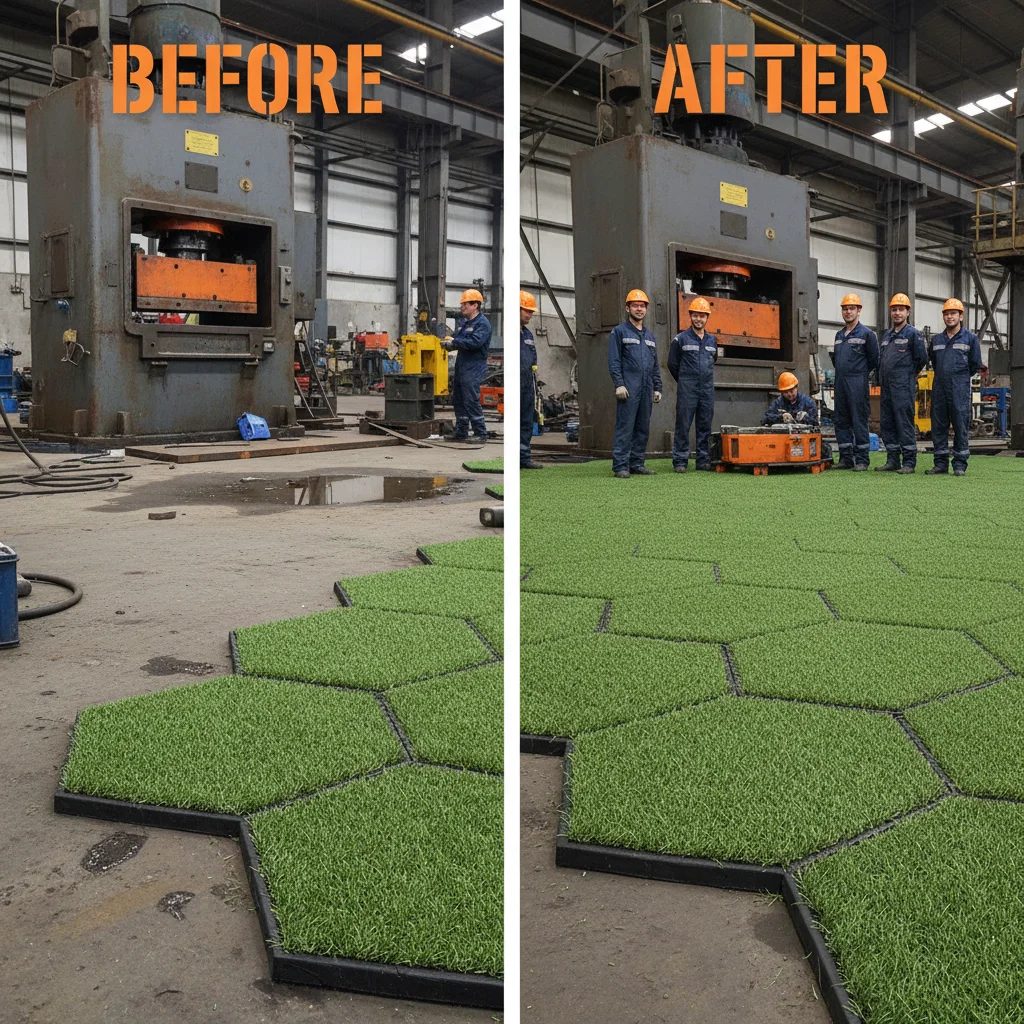
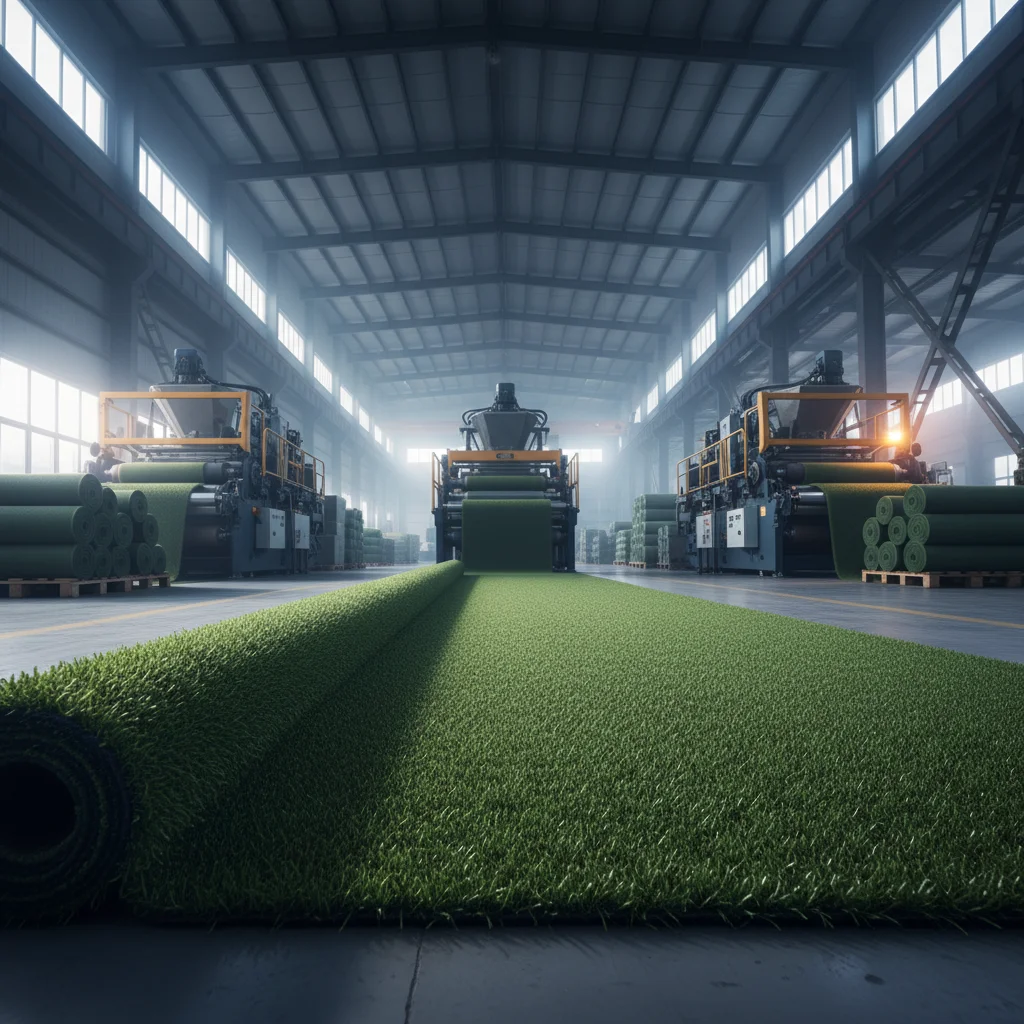
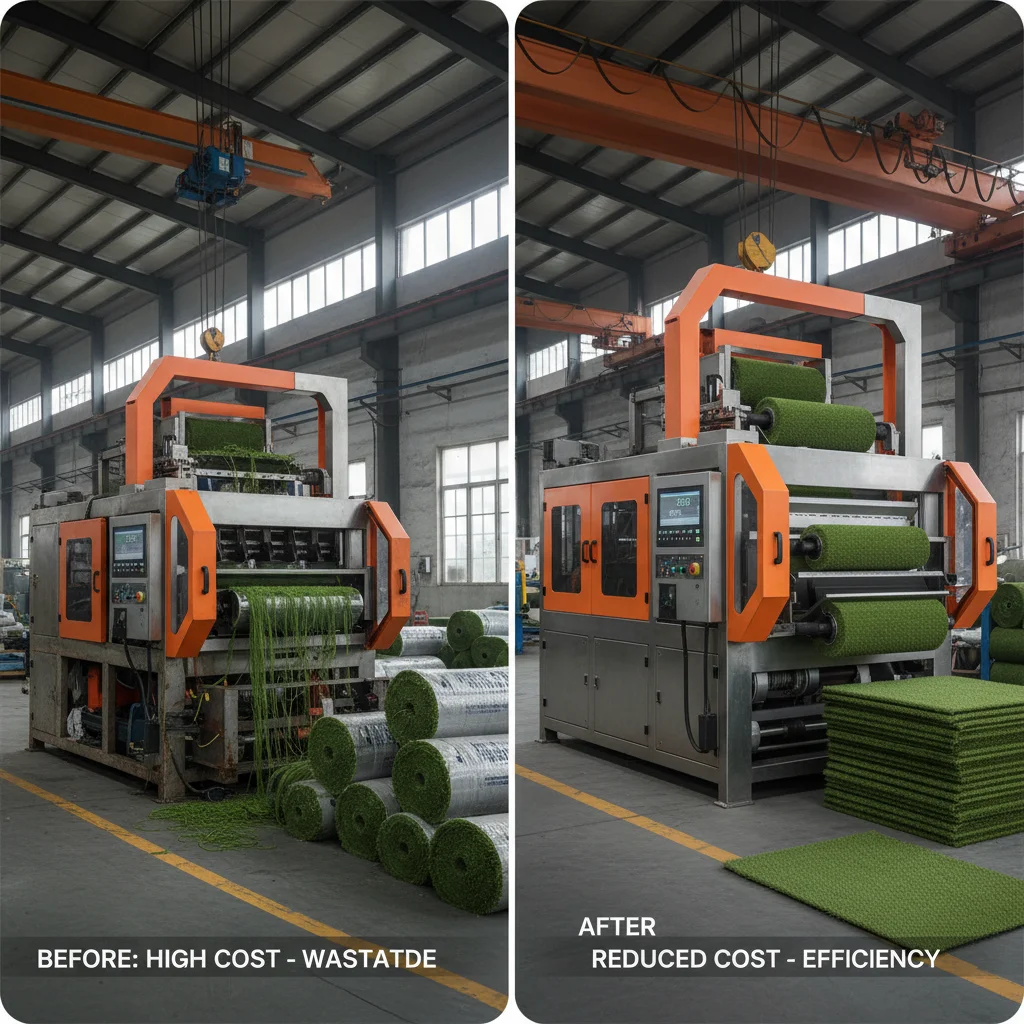
Our powerful factory, covering 5,000 m², is equipped with modern tufting machines that ensure precise stitch rate control and consistent fiber height—critical factors for uniform heat dissipation across the entire roll. This scale allows for high-volume production without sacrificing spec accuracy.
OEM/ODM Design for Thermal Optimization
Our OEM/ODM design team works with buyers to develop products tailored to specific climatic conditions. Whether you need a grass optimized for the Southwest USA or a cooler variant for family gardens, we adjust yarn composition, density, and pile height to meet your performance targets.
Supply Chain & Logistics Efficiency
Leveraging China's supply chain advantages and our established logistics partnerships, we offer high-speed delivery with reliable lead times. Standard FOB/CIF terms are available, and products are packaged in sturdy, weather-protected rolls to ensure they arrive in perfect condition.
Trust and Verification: Compliance, Capacity, and Client Feedback
Trust in the global B2B market is built on verifiable credentials and real-world results.
Certifications & Compliance
Our manufacturing processes and products adhere to international standards, providing assurance for import and end-use. Relevant certifications include:
- ISO 9001:2015: For quality management systems.
- CE Certification: Indicating conformity with health, safety, and environmental protection standards for the European Economic Area.
- RoHS Compliance: Restriction of Hazardous Substances, ensuring materials are free from specific hazardous materials.
- Reach Compliance: Concerning the registration, evaluation, authorization, and restriction of chemicals.
Note: Specific certification requirements (e.g., FDA, SAA, IPPC) can be discussed for OEM projects based on target market regulations.
Operational Transparency
- Founded: Over a decade of industry experience.
- Employees: A dedicated team overseeing production, R&D, and quality control.
- MOQ: Flexible, typically starting at 1x20' container. Smaller sample orders are encouraged for evaluation.
- Lead Time: 15-25 days for standard products; varies for custom OEM/ODM projects. Confirmed upon order.
- Customization: Full support for custom pile heights, colors, densities, and packaging.
What Clients Are Saying
"We switched to XY Grass for our Arizona-based landscaping supply business specifically for their 'cooler' grass line. The technical data they provided on IR reflection was accurate. Our installers report noticeably lower surface temps compared to our previous supplier, and customer callbacks have dropped significantly."
– Michael R., Brand Owner, Southwest USA
"As a sourcing agent for European DIY chains, I need suppliers who are precise and transparent. XY Grass provided third-party test reports on heat resistance alongside their CE docs. Their factory's quality control process is systematic, which gives me and my clients confidence in batch-to-batch consistency."

– Sarah L., Sourcing Agent, Germany
"We ordered a custom ODM run for a dog park project requiring a non-toxic, heat-reducing turf. XY Grass's R&D team proposed a specific infill mix and fiber shape. The final product performed excellently in field tests, and the project was a success. Their collaboration was professional from start to finish."
– David K., Import Manager for a Municipal Supplier, Canada
Request Your Technical Specifications and Sample
Evaluating turf temperature performance requires concrete data and physical samples. Don't rely on generic claims.
Next Step for Serious Buyers: Contact our sales team to:
- Request a Technical Datasheet for our standard heat-reduced product lines.
- Discuss your specific market needs and receive a customized OEM/ODM proposal.
- Order a physical sample to conduct your own temperature tests under local conditions.
- Get a detailed quotation with clear FOB/CIF terms, MOQ, and lead time.
Contact XY Grass Today:
Tel: +86-13931845866
Email: sales@xiongyigrass.com
Website: https://www.xy-grass.com/contactus/
Address: Hope New District, Mengcun County, Cangzhou City, Hebei Province, China.
Frequently Asked Questions (FAQ) on Turf Temperature
What is a typical temperature difference for "cool" artificial grass?
Under identical full-sun conditions, grass engineered with thermal-reflective technology can measure 10°F to 25°F (5°C to 14°C) cooler than standard artificial grass. The exact difference depends on ambient temperature, sun angle, and specific product construction.
Do you provide test reports for heat performance?
Yes. We can provide in-house lab data and, upon request, arrange for third-party testing to measure surface temperature under controlled IR radiation, giving you objective data for evaluation.
Can you make turf for very hot climates?
Absolutely. Through our OEM/ODM design service, we can optimize multiple variables—yarn formulation, pile height, density, and infill recommendation—to create a product specifically engineered for maximum heat reduction in desert or tropical climates.
How does backing affect turf temperature?
A breathable, perforated backing allows heat to dissipate downwards and improves drainage. We use a multi-layer backing system designed for durability and permeability, which supports overall thermal management.
What is the MOQ for a custom "cool" grass product?
Minimum order quantity for a custom formulation typically starts at one 20-foot container. We recommend beginning with a sample order to verify performance before committing to full container production.

About the Author: Alex Chen
Alex Chen is a Technical Manager with over 8 years of experience in polymer science and artificial turf manufacturing at XY Grass. He oversees product development and quality assurance protocols, specializing in performance optimization for different environmental conditions. His work focuses on translating technical data into practical solutions for global wholesalers and installers.
Disclaimer: All technical data, MOQ, lead times, and performance specifications mentioned are for reference. Final product specifications and commercial terms are subject to the signed purchase order and may vary based on custom requirements. It is recommended to test samples under your specific project conditions.